
AI Design Verification
Automate design verification
& validation to ensure accuracy
Key Applications
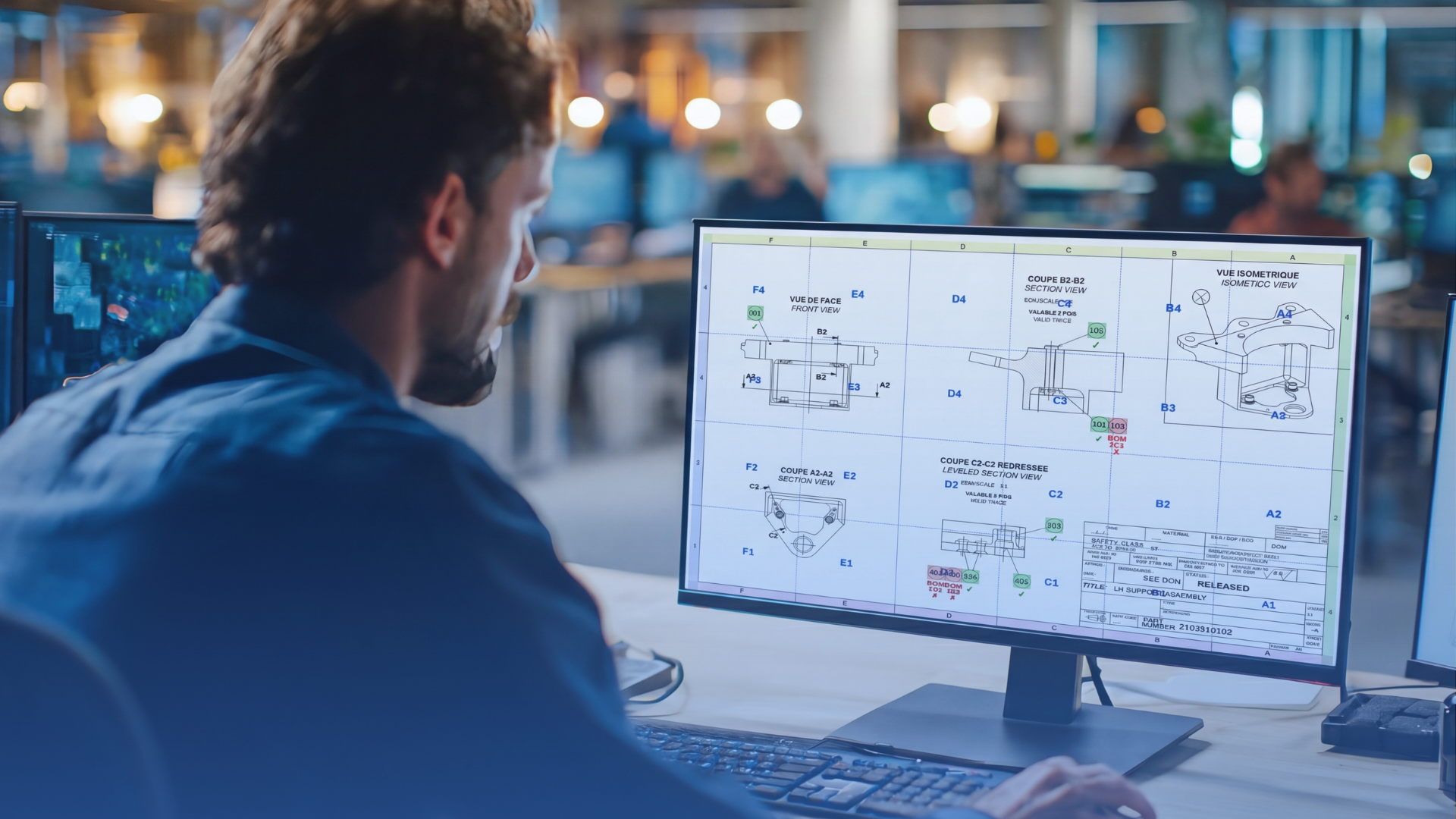
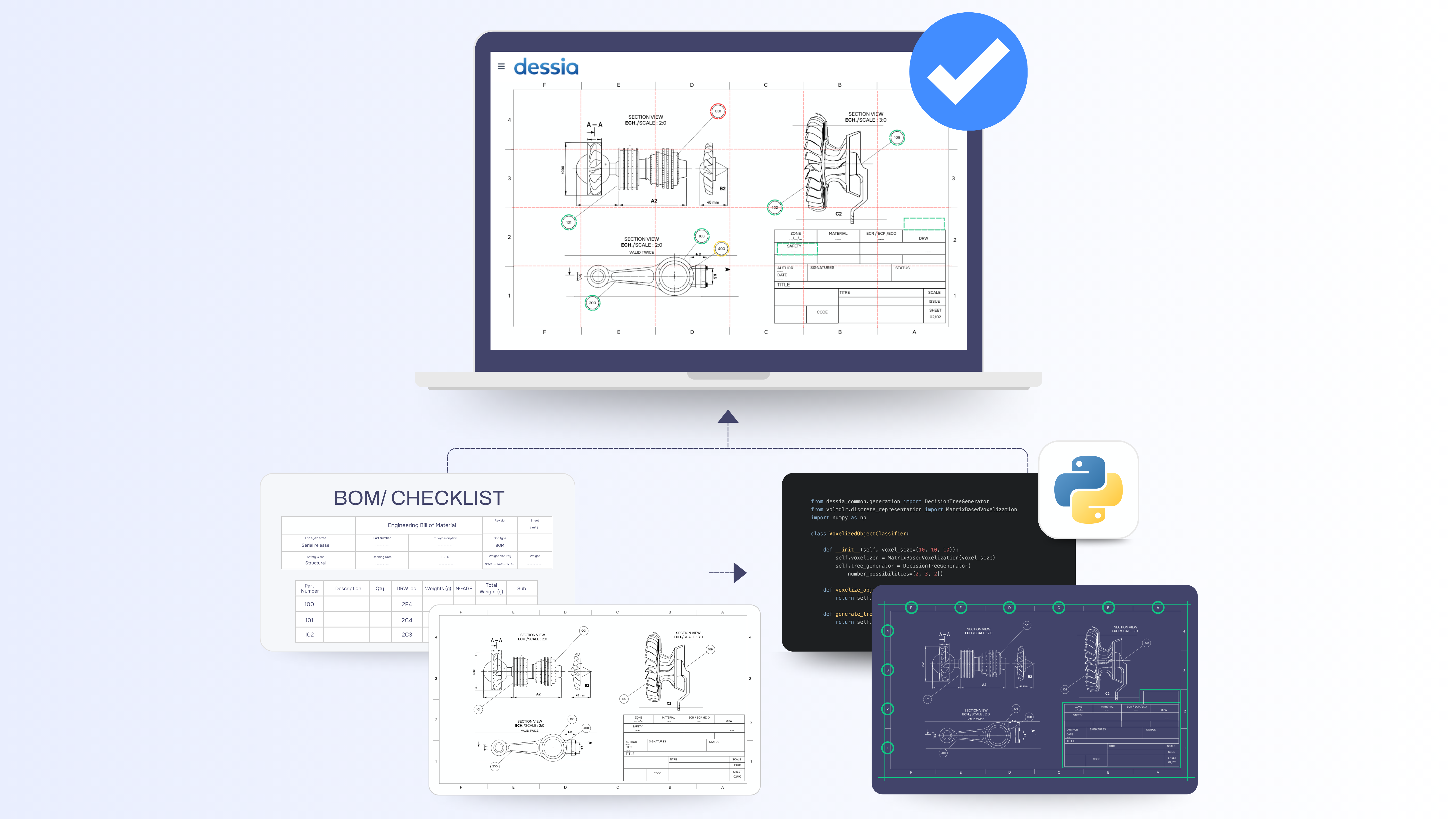
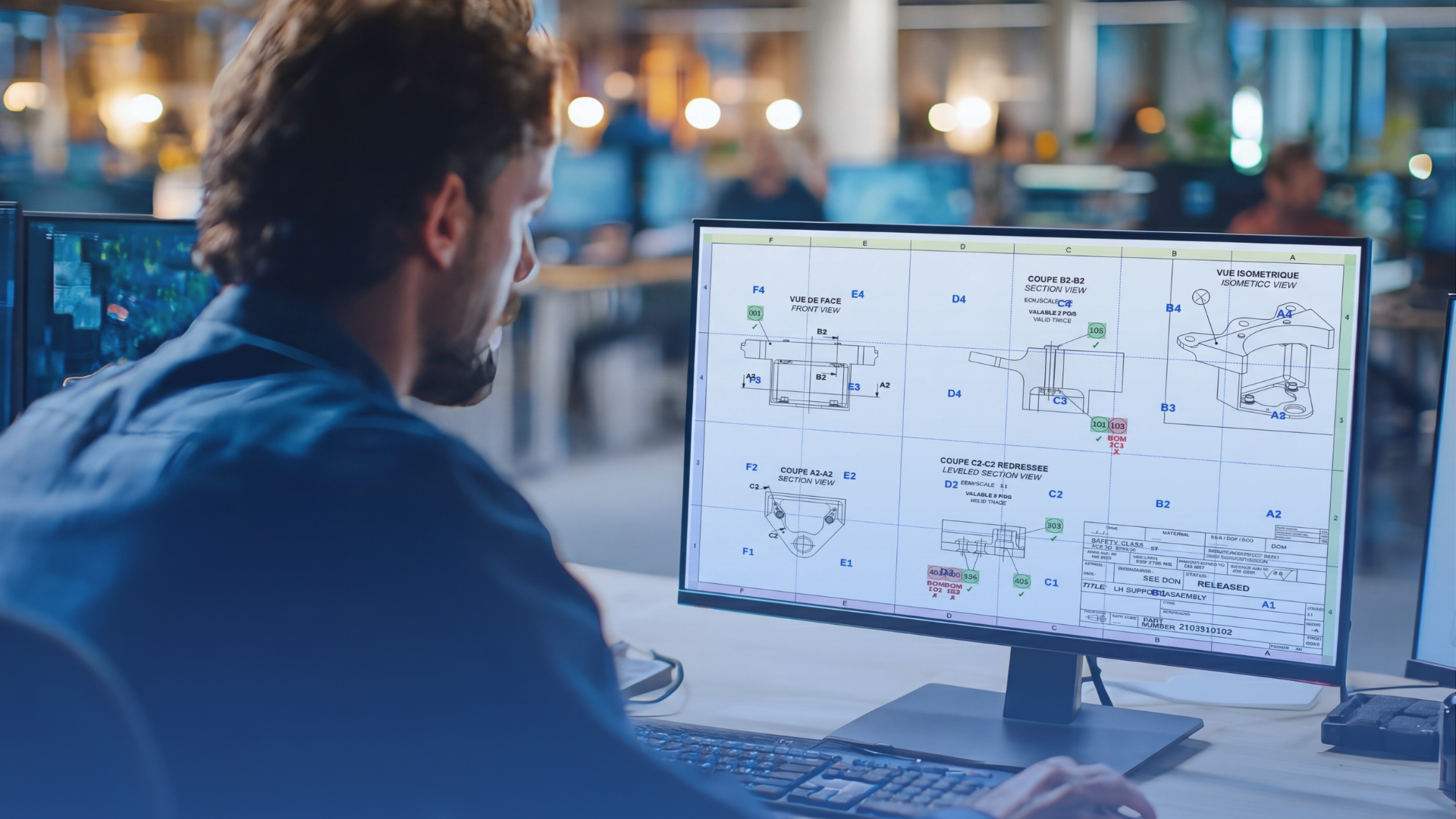
2D drawing completeness checks
Make drawings release-ready faster by detecting missing or inconsistent information (tags, grids, annotations) and cross-checking against BOM/checklists.
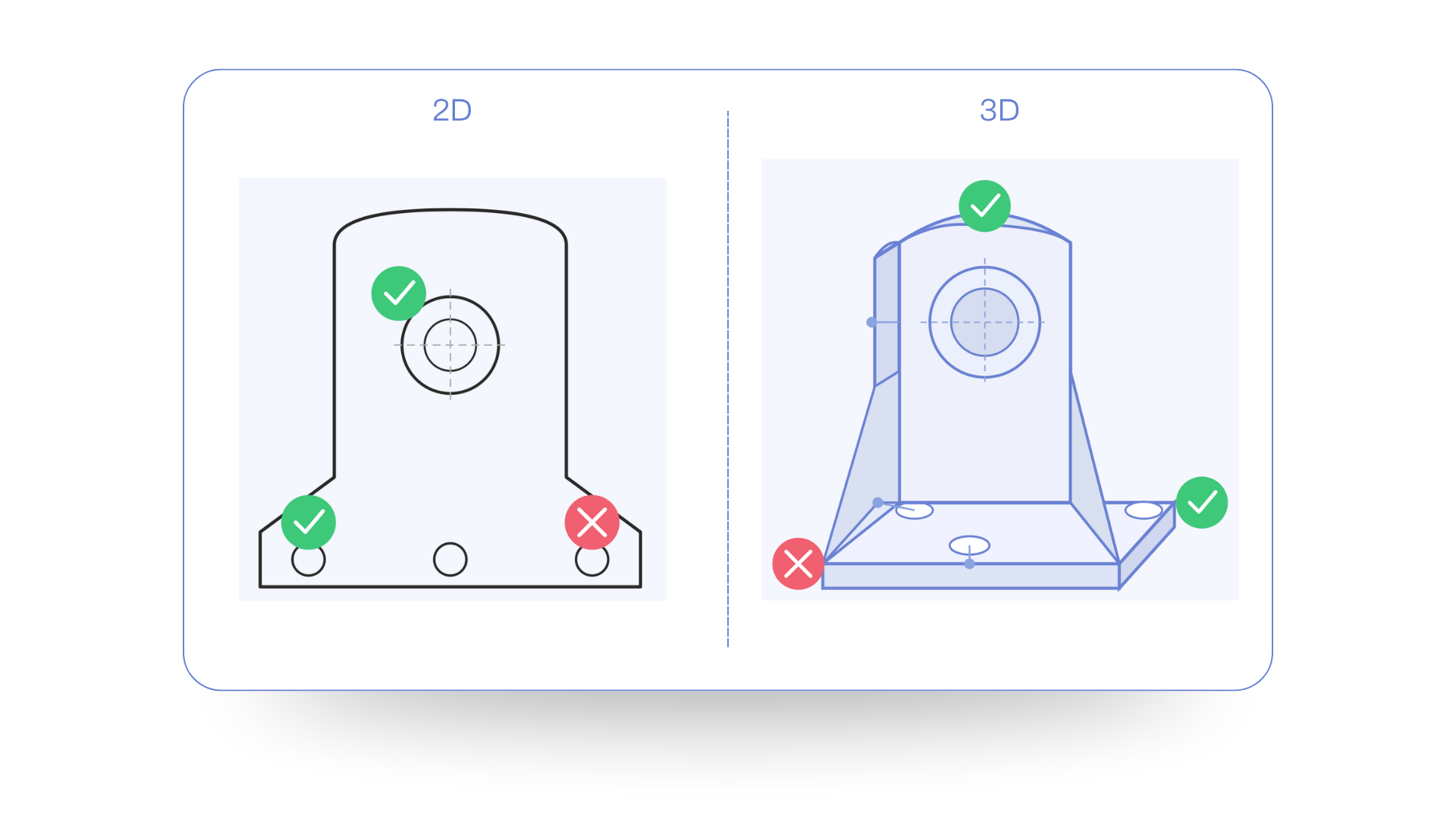
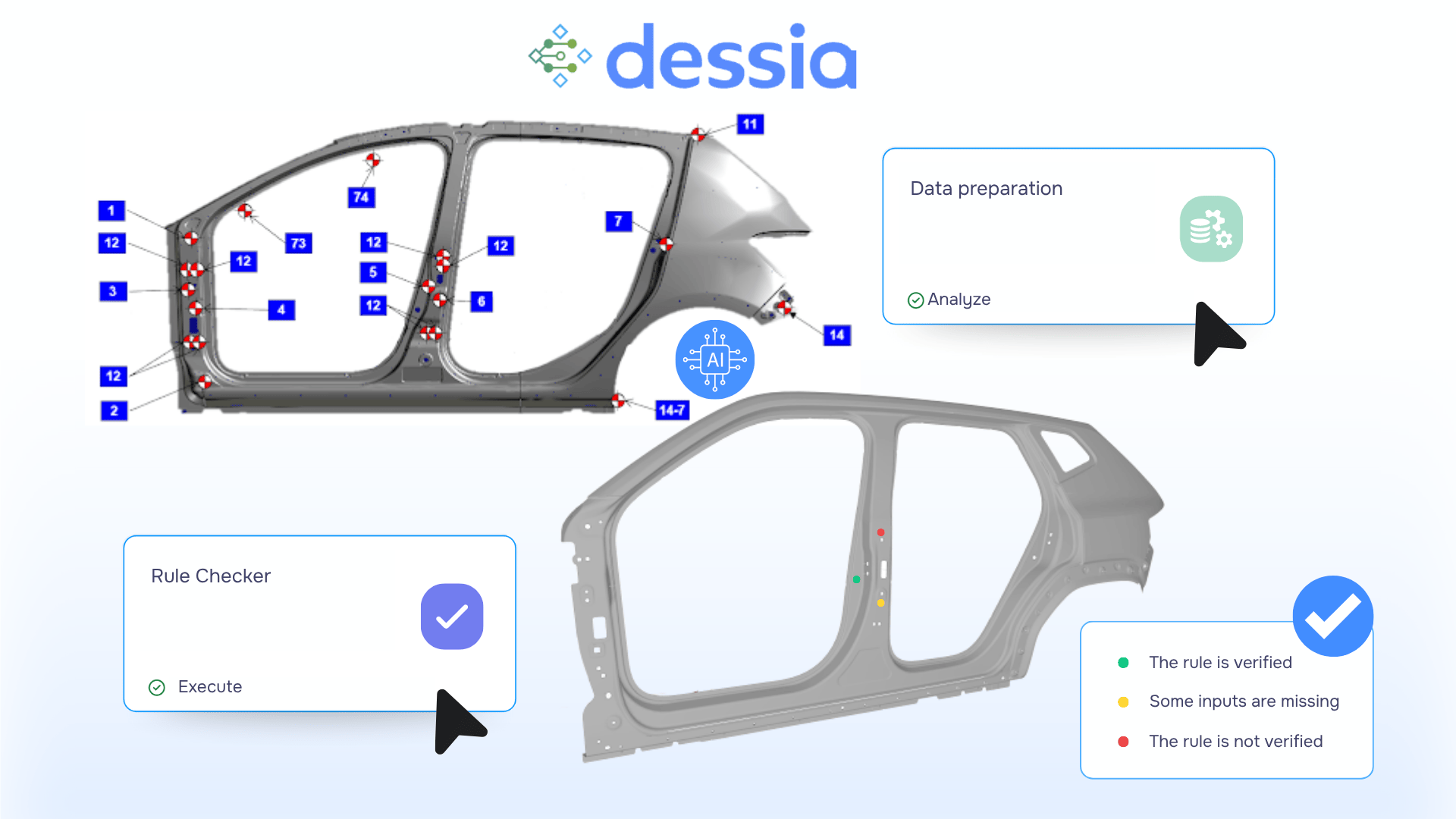
3D design rule checks
Run configurable 3D checks across development—placement, dimensional compliance, spacing, and assembly integrity—to apply your engineering rules at scale.
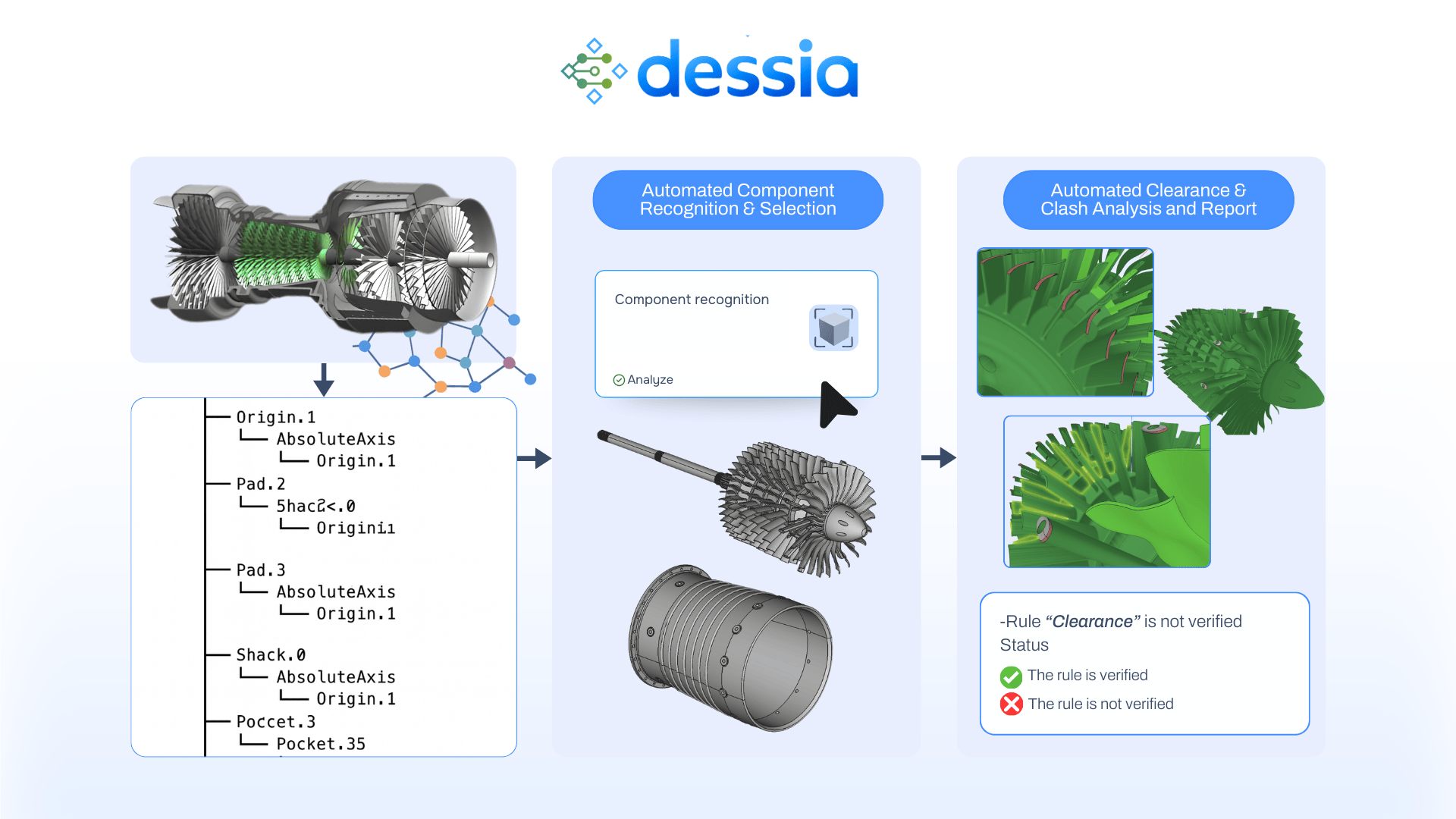
3D clearance & clash checks
Detect integration issues early with automated clearance verification and clash detection—before they become late-stage rework.
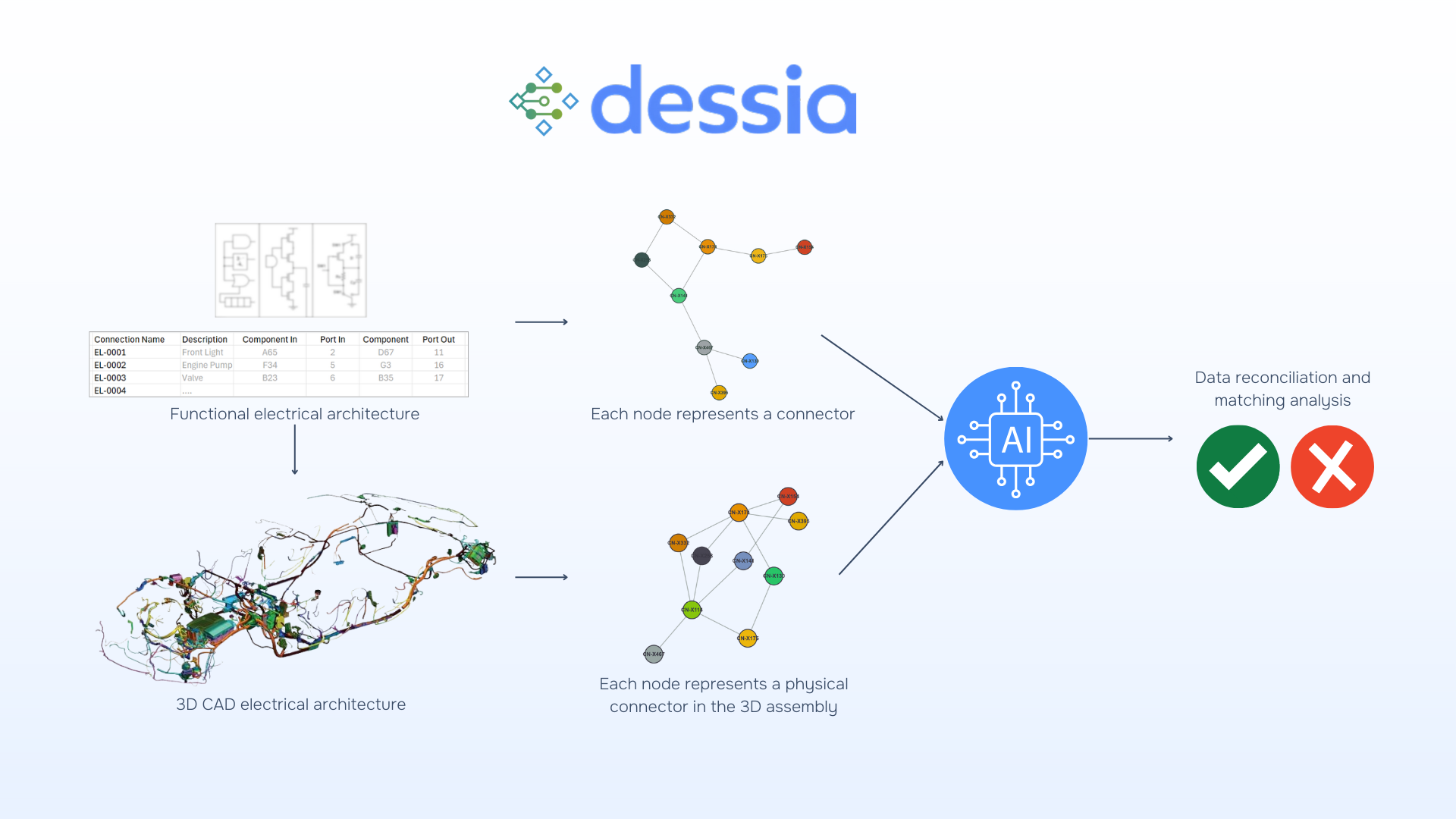
Digital consistency verification (CAD / 3D / BOM/PLM)
Verify consistency across deliverables by reconciling CAD with the physical 3D architecture and checking digital mockup alignment with BOM/PLM—before release.
Dessia’s AI Design Verification & Validation eliminates bottlenecks from design reviews by automating 2D drawing completeness checks, running configurable 3D rule checks based on your engineering rules, and verifying coherence across deliverables (drawings, 3D, BOM/PLM)—so you catch issues earlier and improve design quality.





Design better, faster, and smarter
Why choose Dessia’s Design verification?
Faster V&V cycles
Reduce time spent on repetitive checks by automating 2D drawing completeness, 3D rule checks, and cross-data coherence—So engineers focus on high-impact work.
Real-time error detection
Catch missing information, rule violations, and deliverable mismatches as designs evolve—before they turn into integration rework.
Scalable across complex projects
Apply the same engineering rules across variants, configurations, and large programs—without relying on individual reviewer habits.
Knowledge digitalization
Transform design guidelines and expert know-how into configurable automated checks that can be executed at every stage of development.
Case Studies
AI Verification & Validation
December 1, 2025
AI Verification & Validation
September 18, 2025
AI Verification & Validation
August 20, 2026

AI Verification & Validation
September 18, 2025
ContactUs
Contact us to see how you can streamline your design process.
FrequentlyAsked Questions
Is Dessia available as a cloud-based solution or on-premise deployment?
Both, Dessia is available as both a cloud-based solution and an on-premise deployment. the platform offers flexibility in deployment based on organizational needs. The cloud-based version provides seamless scalability, automatic updates, and lower IT infrastructure management. For organizations with strict security, compliance, or operational constraints, an on-premise deployment is available. This option allows full control over data storage, security policies, and integration with internal IT systems while maintaining the platform’s core functionalities.
Does the platform/ Dessia integrate with existing PLM systems and support standard 3D CAD formats?
Yes, the platform is designed to connect through API with third-party software, including PLM solutions and supports industry-standard 3D CAD formats. This ensures seamless interoperability between engineering tools, allowing for structured data exchange and automated workflows. By maintaining compatibility with these formats, the platform facilitates digital continuity, reducing manual data handling, preventing errors, and ensuring that design iterations remain synchronized across all systems.
What type of AI does Dessia use?
Dessia leverages both symbolic and statistical AI, depending on the nature of the problem and the data available. Our approach allows us to use symbolic AI for explainability and deterministic modeling, integrating structured expert rules to ensure transparency, consistency, and compliance with engineering constraints. At the same time, we can incorporate statistical AI when dealing with complex patterns and data-driven insights. By combining both methods when needed, we enable a more flexible, efficient, and traceable exploration of design solutions.
Do I need a data scientist to configure and use the platform?
No, the platform is meant to be used by designers and engineers to use without AI or data science expertise. They can get started easily, integrating it into their processes with full flexibility. Teams can work independently or with the methods and tools department, without added complexity.