
Your engineering complexity grows
Our AI harness connects the dots
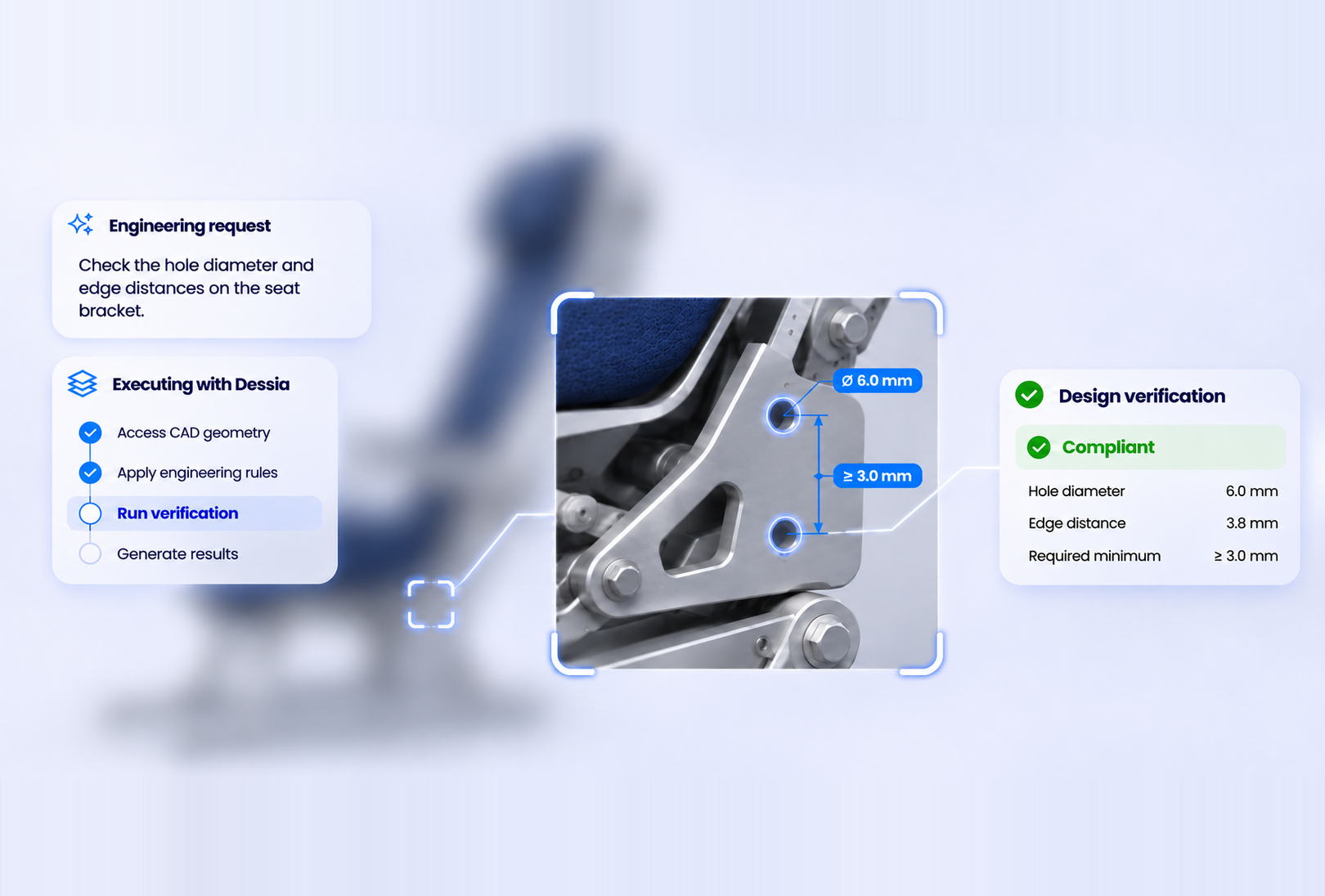
Engineering doesn't start with a prompt. It starts with CAD models, drawings, requirements and years of expertise. Dessia makes that knowledge usable by specialized AI tools and agents — turning engineering intent into operations your teams can inspect, refine and reuse.
Engineering Intelligence
From Knowledge to Execution





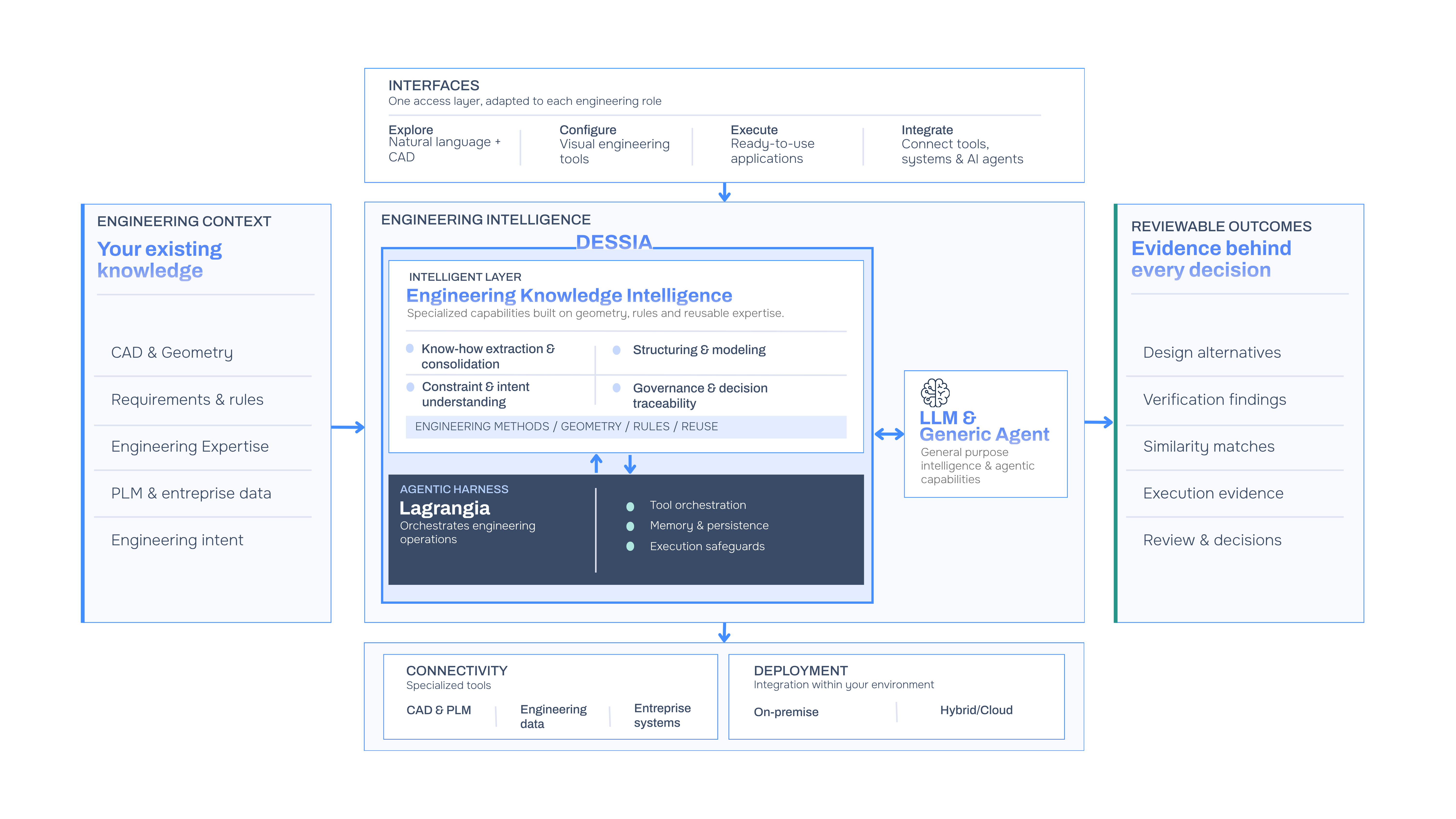
ENGINEERING INTELLIGENCE ARCHITECTURE
Your engineering stackConnected to intelligence
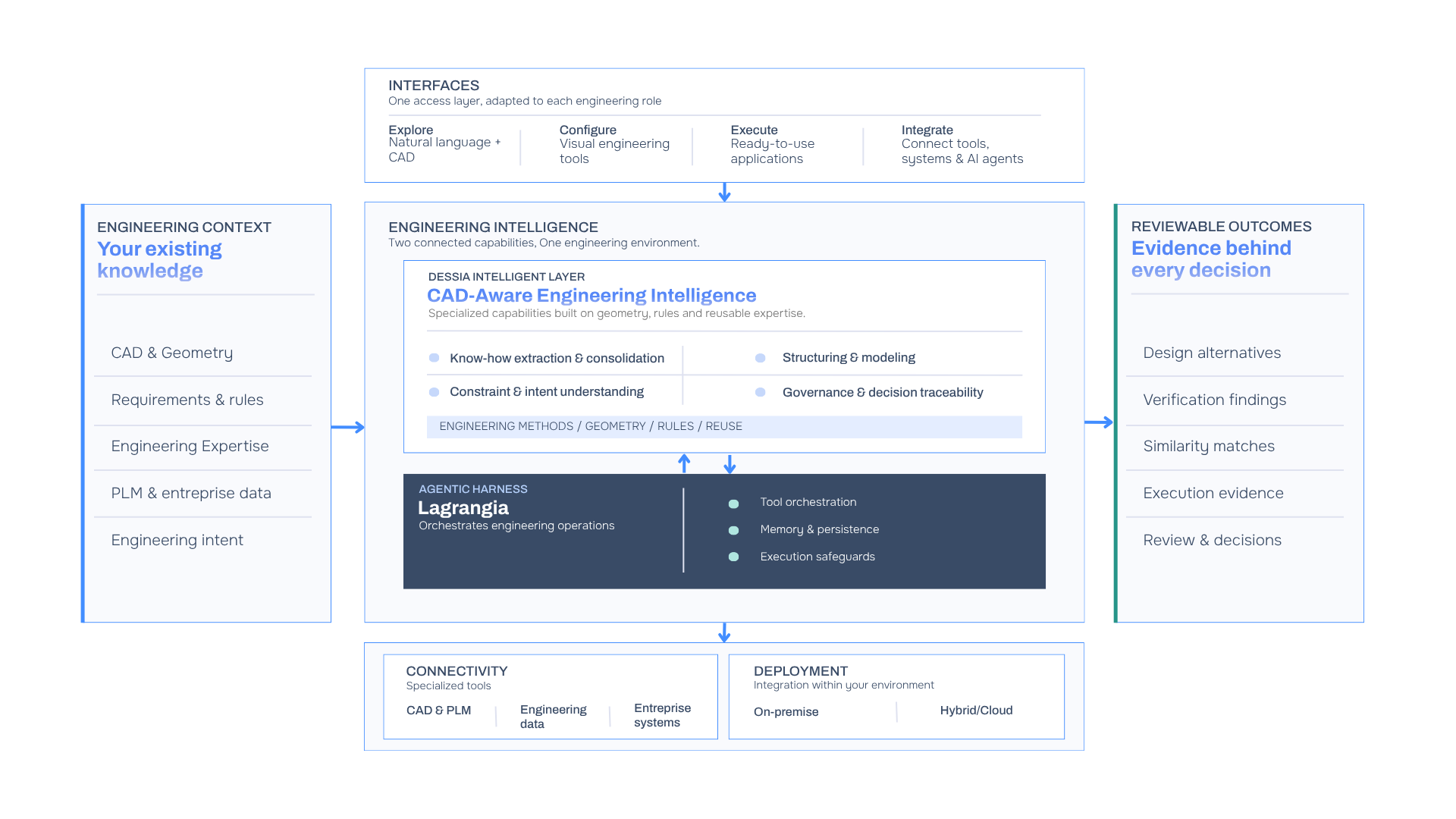
CAD-Aware Engineering ai
Engineering context Specialized intelligenceTraceable execution
CAD-Aware Intelligence
Engineering SDK
Agentic Orchestration
Execution & Traceability
Engineering ai, in practice
Complex EngineeringConcrete Results
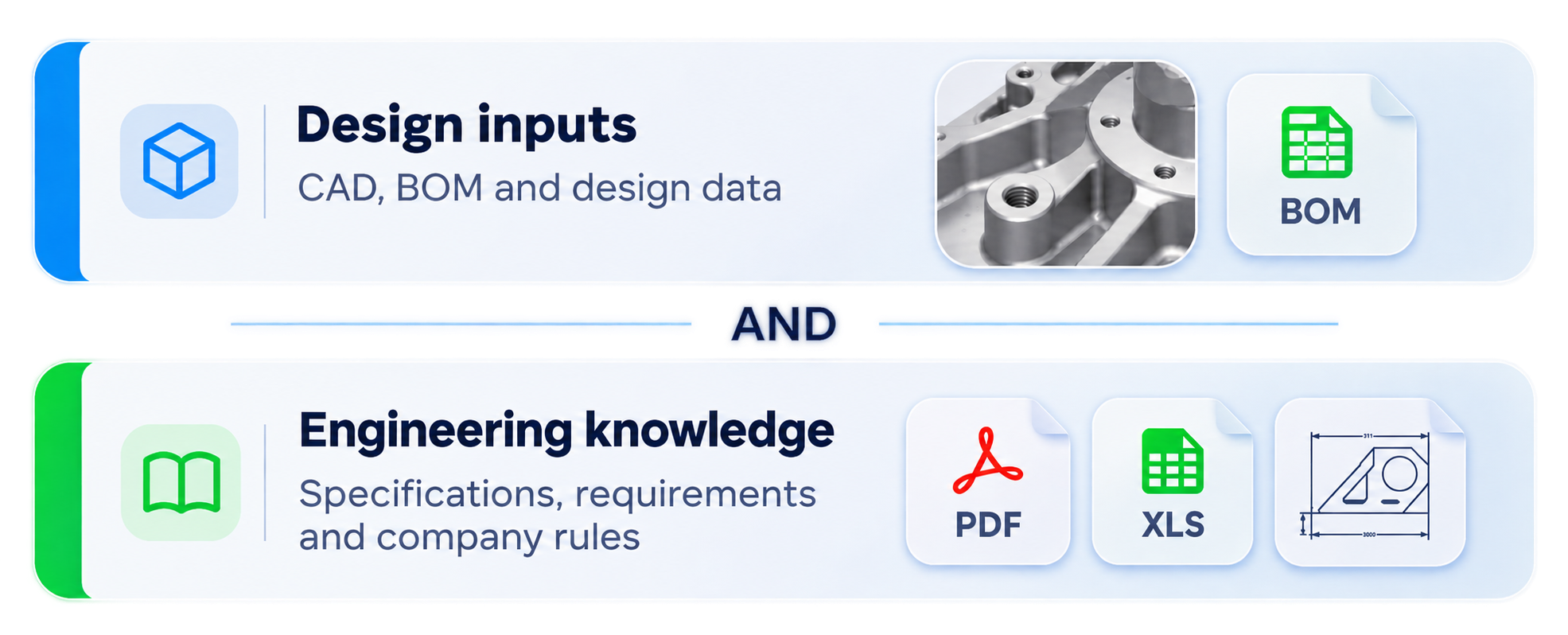
Beyond CAD. Your complete engineering context.
CAD models and BOMs describe what you're building. Technical documents and company rules define what it must respect.
Dessia connects both, enabling AI to understand designs, apply requirements and deliver traceable results.
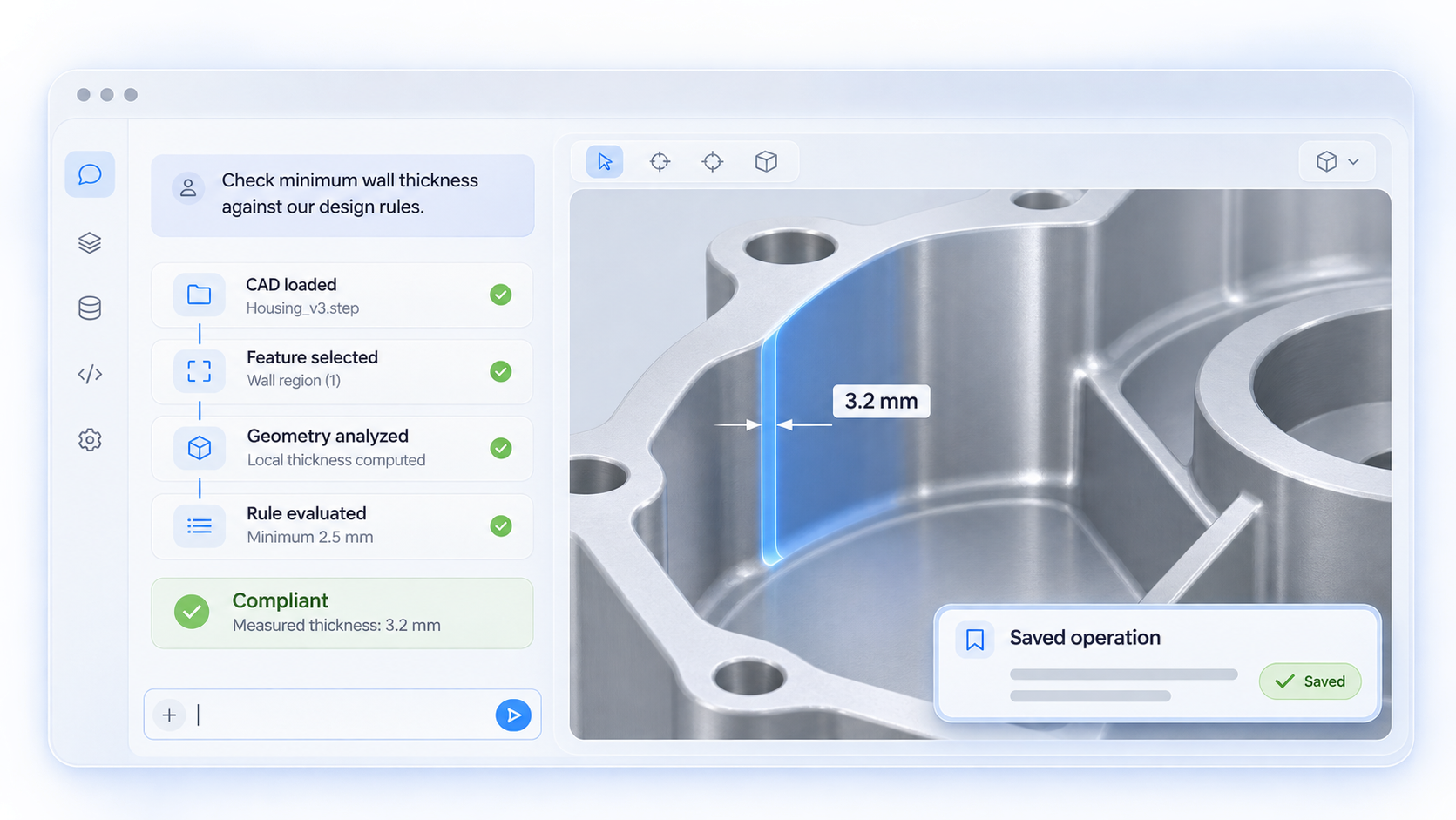
From engineering intent to reusable operations
Define technical tasks in natural language, interact directly with engineering data and capture successful processes as reusable agents.
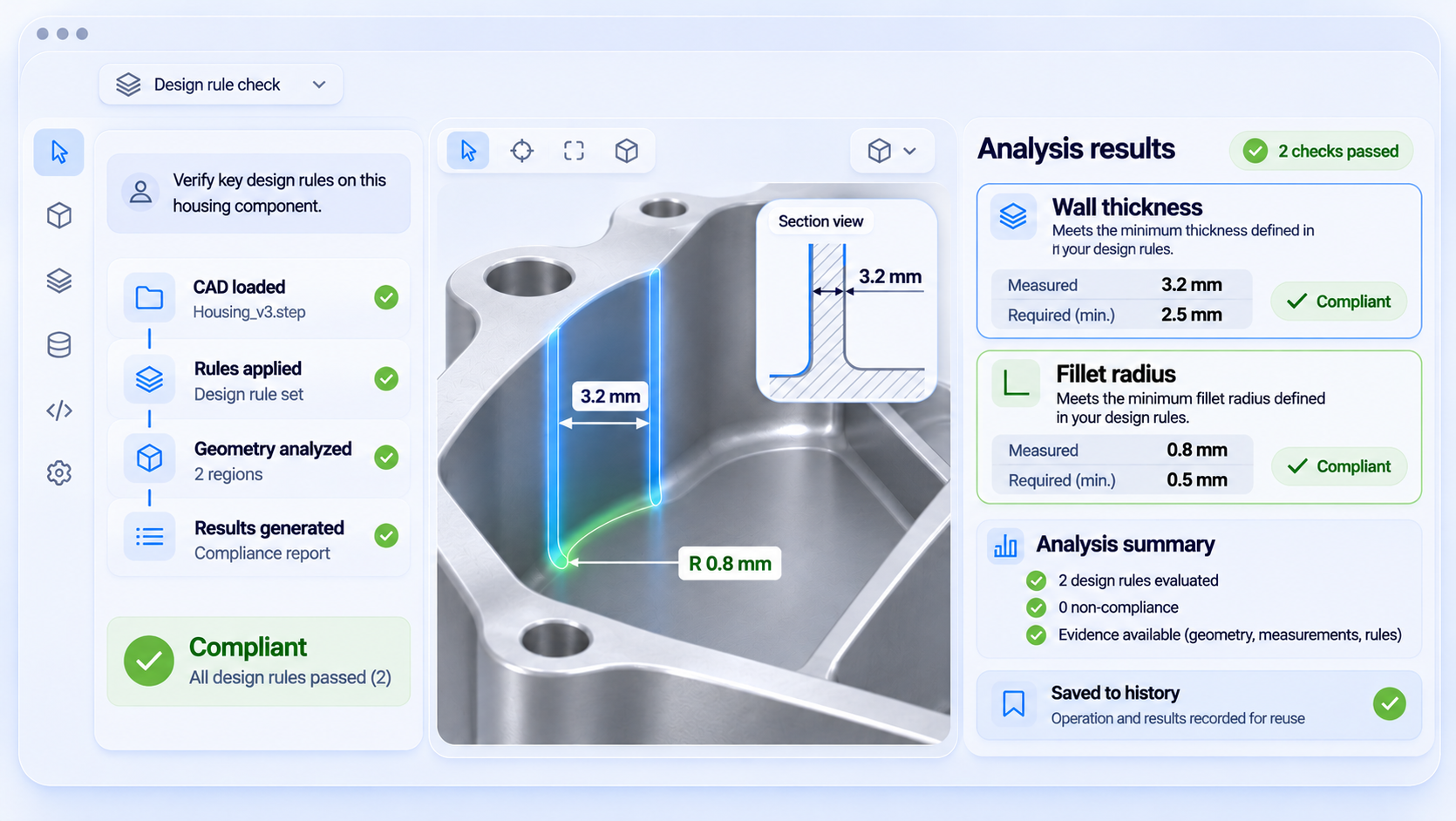
Geometry-aware intelligence, guided by your rules
Combine geometric analysis with company-specific engineering knowledge, and product-specific rules to evaluate designs, verify technical requirements and produce evidence-based results.

Agentic execution with built-In traceability
Our Agentic Harness coordinates specialized engineering tools through a controlled agentic harness, preserving execution context and supporting repeatable, reviewable operations.
AI models are a commodity
The harness makes the difference
Lagrangia is Dessia's agentic harness, connecting AI models to specialized engineering tools, CAD geometry and company-specific rules. It coordinates tool execution, maintains context across steps, and preserves the evidence behind each result — making engineering operations reproducible and traceable.
Agentic AI
For Engineering

Talk toour experts
Discover how Dessia can help optimize your design processes and accelerate innovation.
FrequentlyAsked Questions
Is Dessia available as a cloud-based solution or on-premise deployment?
Both, Dessia is available as both a cloud-based solution and an on-premise deployment. the platform offers flexibility in deployment based on organizational needs. The cloud-based version provides seamless scalability, automatic updates, and lower IT infrastructure management. For organizations with strict security, compliance, or operational constraints, an on-premise deployment is available. This option allows full control over data storage, security policies, and integration with internal IT systems while maintaining the platform’s core functionalities.
Does the platform/ Dessia integrate with existing PLM systems and support standard 3D CAD formats?
Yes, the platform is designed to connect through API with third-party software, including PLM solutions and supports industry-standard 3D CAD formats. This ensures seamless interoperability between engineering tools, allowing for structured data exchange and automated workflows. By maintaining compatibility with these formats, the platform facilitates digital continuity, reducing manual data handling, preventing errors, and ensuring that design iterations remain synchronized across all systems.
What type of AI does Dessia use?
Dessia leverages both symbolic and statistical AI, depending on the nature of the problem and the data available. Our approach allows us to use symbolic AI for explainability and deterministic modeling, integrating structured expert rules to ensure transparency, consistency, and compliance with engineering constraints. At the same time, we can incorporate statistical AI when dealing with complex patterns and data-driven insights. By combining both methods when needed, we enable a more flexible, efficient, and traceable exploration of design solutions.
Do I need a data scientist to configure and use the platform?
No, the platform is meant to be used by designers and engineers to use without AI or data science expertise. They can get started easily, integrating it into their processes with full flexibility. Teams can work independently or with the methods and tools department, without added complexity.