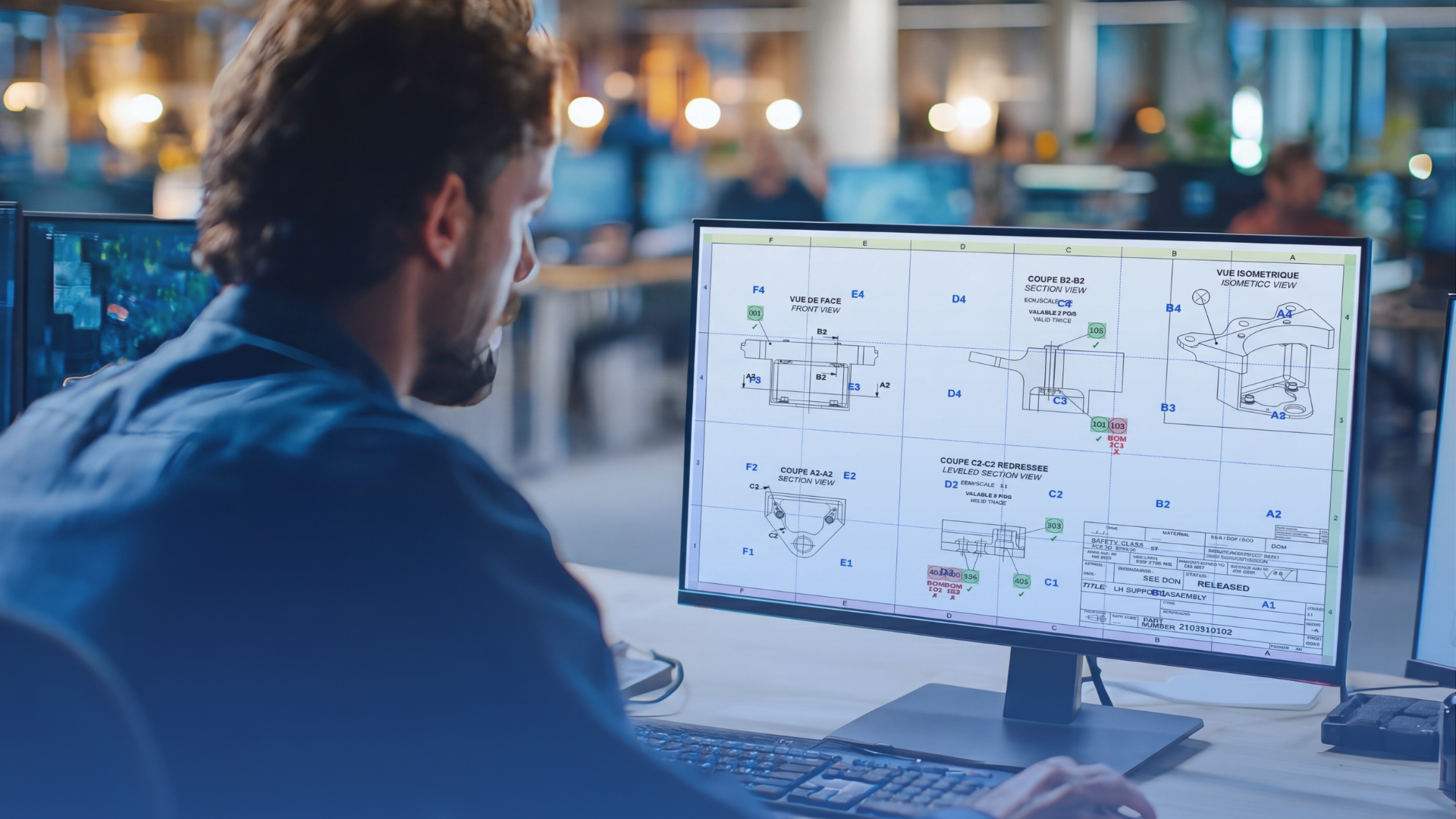
AI-powered 3D clash verification: An approach to smarter integration
Discover how AI-powered 3D clash analysis transforms packaging validation by eliminating false positives and scaling verification across all variants. A smarter, faster, explainable way to ensure clean integration in complex products.
AI-powered 3D clash analysis: An approach to smarter integration
In every engineering-driven industry — aerospace, automotive, rail, energy, naval, heavy machinery, and industrial equipment — physical integration is one of the most difficult and critical phases of product development.
Whether it’s an aircraft nacelle, an electric vehicle powertrain, a rail traction module, or a multi-system industrial machine, each product hosts hundreds to thousands of components that must coexist within tight geometric spaces— a challenge known as packaging activities: structures, cooling circuits, hydraulic networks, electrical harnesses, thermal shields, sensors, actuators, and supplier-specific modules.
Every new variant introduces new geometry, new suppliers, and new system interactions — creating an overstatement that design teams must validate under increasing time and cost pressure.
At the same time, engineering data is scattered across heterogeneous digital environments: CAD assemblies in legacy modelers and PLM systems holding complex hierarchies and metadata.
This fragmentation makes end-to-end validation slow, manual, and error-prone.
Yet before any product reaches prototype, manufacturing, or certification, teams must ensure that every subsystem fits and functions together — and that no mechanical interference (“clash”) jeopardizes physical prototyping or industrialization.
A single undetected clash can generate delays by weeks, trigger costly redesign loops, or compromise compliance requirements.
Across all industries, one truth remains:
➡️ Preventing late-stage design errors is not optional — it is a strategic driver of quality, traceability, and operational efficiency.
Challenges across industries
1. Manual and fragmented verification workflows
Most companies still rely on manual CAD inspections, since available clash detection tools flag every geometric contact — even intended ones — and are operated independently by design offices, suppliers, or integration teams.
Manual based Clash reports often exceed hundreds of pages, listing every contact point, including false positives.
Designers then must manually filter, validate, categorize, and circulate them — a slow, non-scalable process that diverts expertise away from higher-value engineering tasks.
This creates:
- Disconnected workflows
- High risk of oversight
- Delays in integration meetings
- Redundant verification cycles across teams and suppliers
2. Limited coverage of product variants
Because manual checks are time-intensive, teams typically validate only a handful of representative configurations.
In industries where product lines include dozens or even hundreds of variants — EV powertrains, industrial machines, engine families, rolling stock options — partial coverage becomes a major risk.
Critical clashes remain invisible until late stages, when resolving them becomes exponentially more expensive.
3. Slow iteration and coordination bottlenecks
Every geometric update — from suppliers, internal design changes, or tolerance adjustments — invalidates previous checks.
Teams must restart verification from scratch, leading to:
- Repetitive work
- Long feedback loops
- Versioning ambiguity
- Misalignment between OEMs and suppliers
This friction directly impacts time-to-market and product quality.
Dessia’s AI-powered solution
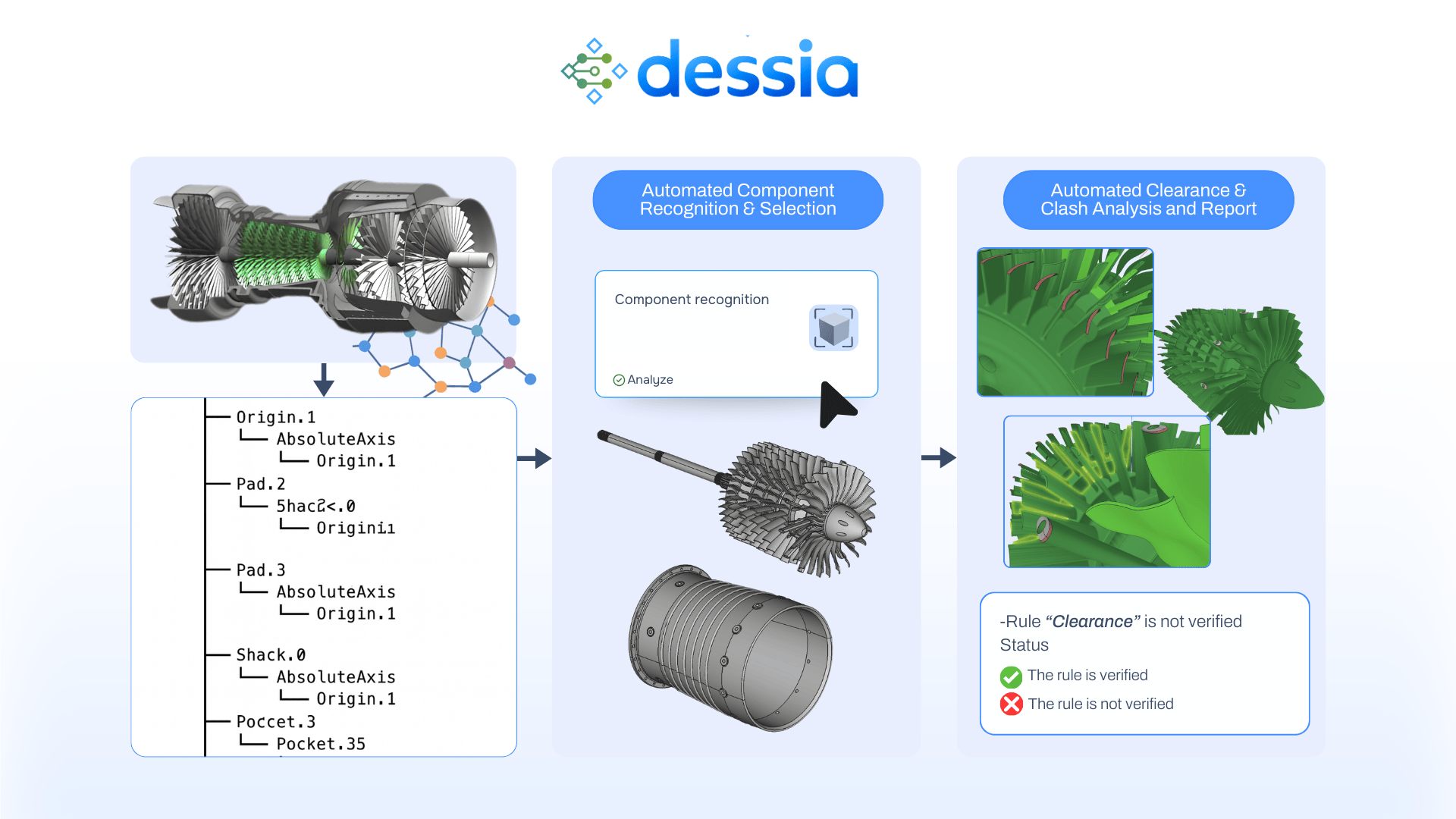
To address these challenges in 3D verification and validation, Dessia provides a AI-based Clash 3D Check capability designed to automate, accelerate, and scale physical integration assessments across all product configurations.
As part of Dessia’s ecosystem of AI libraries, this capability enables engineering teams in any industry to validate full 3D assemblies within minutes, with exhaustive coverage and audit-ready traceability.
A smarter approach to 3D verification & validation
Distinguishing functional contacts from true clashes
Traditional CAD clash-detection tools flag every contact as an interference — even when the contact is intentional and required for proper assembly.
Examples of normal, functional contacts include:
- A screw engaging a bracket
- A connector seated in its port
- A clip touching a panel
- A gasket applying its designed compression
- A mounting interface in tight contact with a support
These interactions appear as "clashes" in conventional reports, generating noise, false positives, and heavy manual filtering.
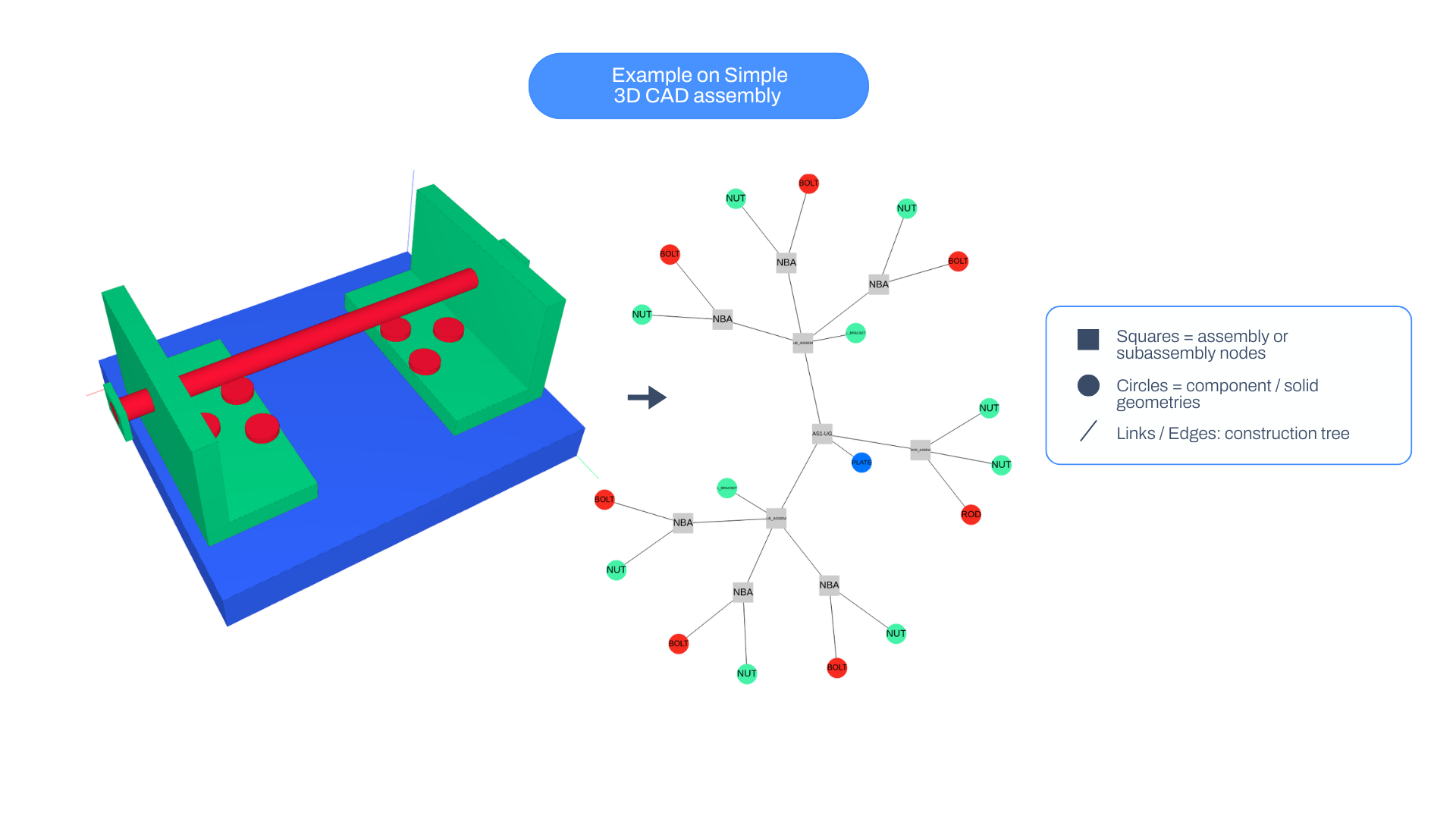
Dessia’s knowledge-driven approach introduces a new paradigm: transforming CAD assemblies in graph and using shape signature algorithm, the system distinguishes expected mechanical interactions from abnormal, unintended, or safety-critical interferences, enabling engineers to focus on real issues such as:
- Unexpected penetrations or overlaps
- Routing collisions (harnesses, ducts, hoses, tubes)
- Misalignments
- Insufficient clearances or tolerance risks
- Supplier geometry deviations or late design changes
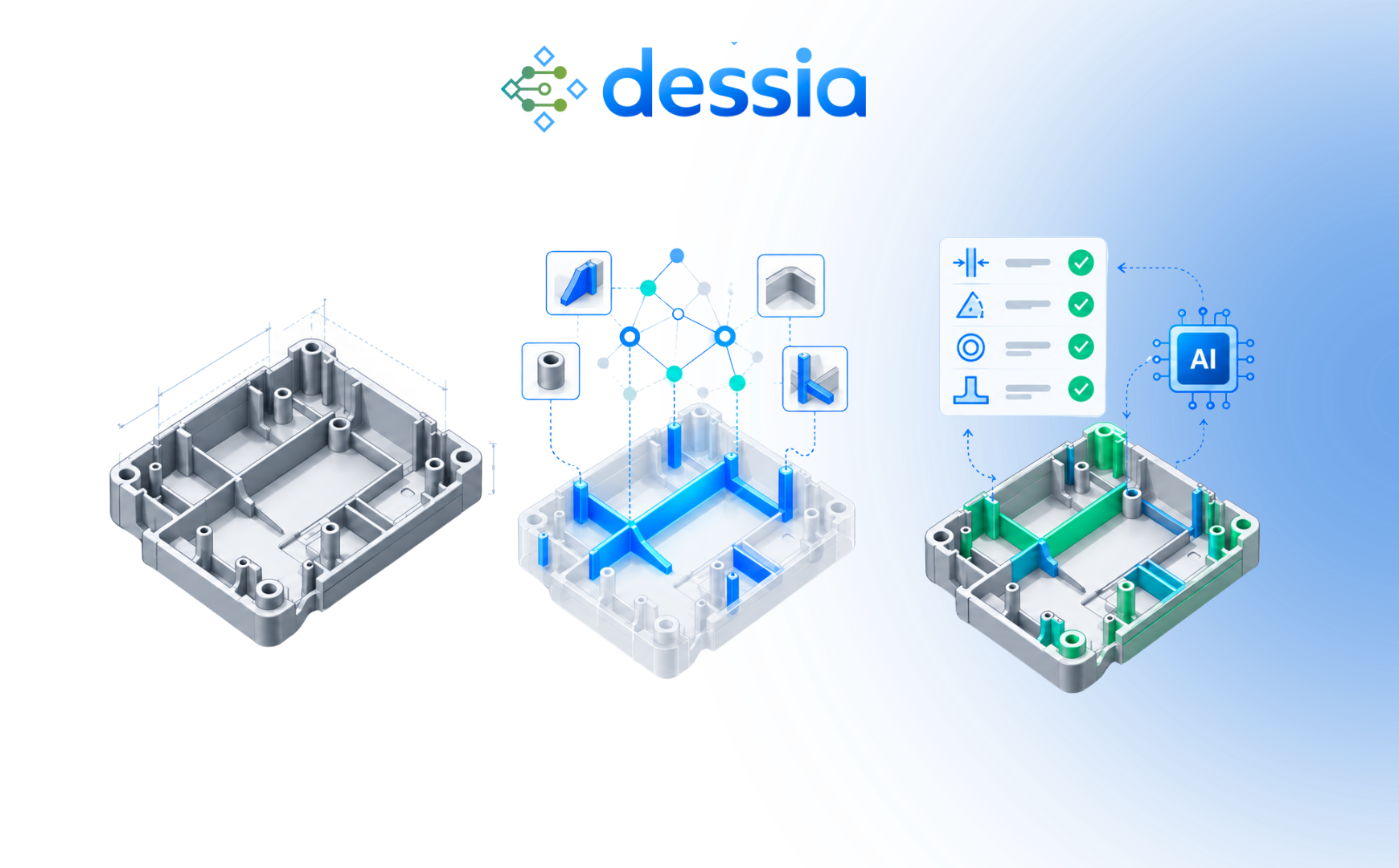
By removing noise and surfacing only meaningful anomalies, the capability produces clean, prioritized, engineering-relevant results.
Impact across industries
Integrating AI into 3D verification workflows gives engineering teams a far more controlled and predictable way to handle 3D packaging activities across products and variants. Instead of relying on selective checks or manual inspection, all configurations can be validated consistently, with clear visibility on where real integration risks exist. Teams gain faster turnaround on design iterations, fewer back-and-forth cycles, and a more reliable understanding of how components, routings, and subsystems coexist in tight spaces.
Beyond speed, the approach strengthens day-to-day collaboration. Designers, integrators, and system owners work from the same structured, explainable results, making technical decisions easier and reducing avoidable misalignments with suppliers or internal stakeholders. Issues are surfaced earlier, redesign loops are reduced, and engineering reviews become more focused on solving problems rather than searching for them. Centralizing all checks also improves traceability, giving programs a clearer history of what was validated, when, and under which conditions.
Conclusion
Across all discrete manufacturing industries, products are becoming more complex, variants more numerous, and integration constraints more demanding.
Manual verification is no longer sustainable.
Dessia’s AI-powered 3D verification and validation capabilities provide a scalable, intelligent, and explainable approach to physical integration — one that fits seamlessly within existing engineering workflows.
By shifting from reactive corrections to proactive, data-driven validation, engineering teams accelerate development, strengthen quality, reduce risk, and achieve a higher level of industrial performance.
This is the future of digital continuity and model-based engineering: where engineering logic is automated, reasoning is explainable, and human expertise is amplified — not replaced — by AI.
Keep exploring - Discover more case studies
AI Verification & Validation
9
min reading
AI for Knowledge Reuse
9
min reading