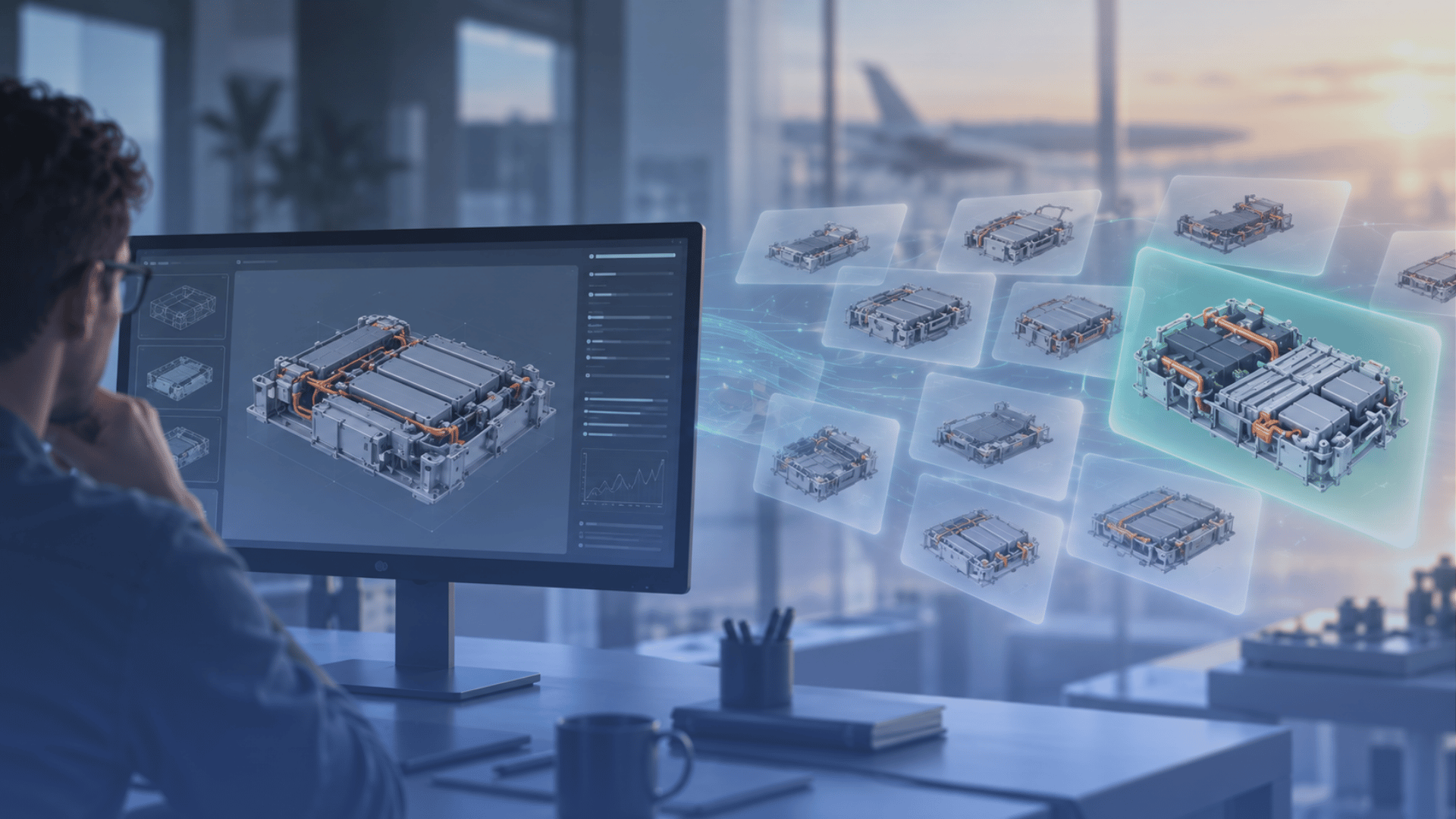
Engineering intelligence
Why CAD data alone is not enough for engineering AI—and how requirements, rules and verification turn geometry into trusted design decisions.
7 min reading

Engineering teams no longer choose between 2D and 3D — they must verify both. Discover how scalable verification systems ensure geometric integrity, documentation completeness, and industrial readiness across complex programs.
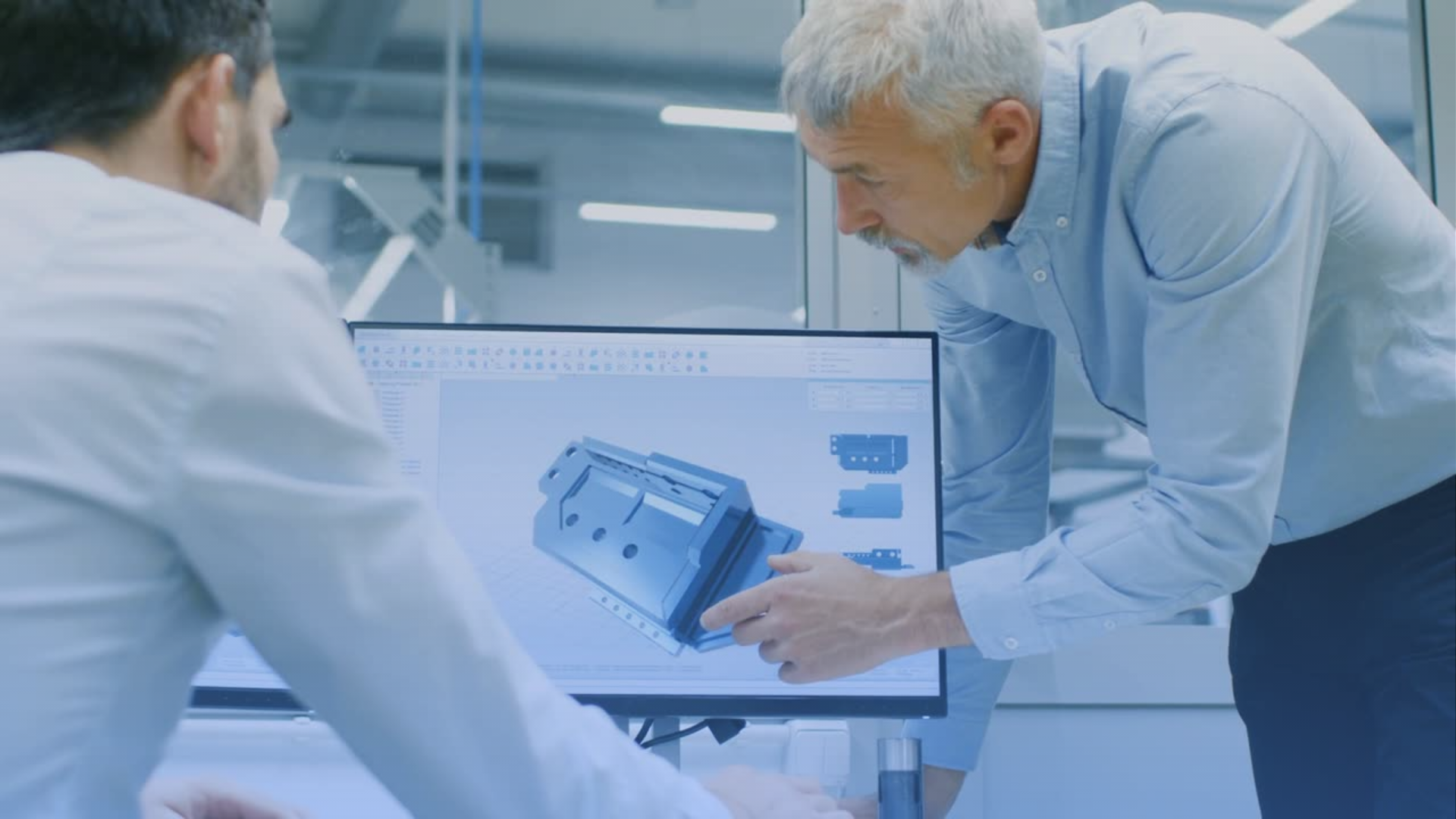
In industrial engineering organizations, the shift to 3D CAD is long complete. Geometry definition, system architecture, simulation, and design iteration are now fundamentally 3D-driven. For most products, the 3D model is the primary design artifact.
Yet when it comes to design verification, manufacturing release, and quality validation, engineering workflows still rely on a combination of 3D models and 2D technical drawings. This coexistence is not accidental, nor transitional. It reflects how engineering intent is formally expressed, validated, and contractually enforced across the product lifecycle.
The real challenge facing organizations today is no longer choosing between 2D and 3D.
It is verifying both, consistently and at scale.
3D verification focuses on the structural and spatial validity of a design.
Typical 3D verification activities include:
These checks operate directly on the 3D model and address questions such as:
3D verification is indispensable for ensuring that a product is geometrically coherent and manufacturable. However, geometry alone is not sufficient to release a design.
2D technical drawings play a different role. They are not a redundant projection of the 3D model. They are the formalization layer of engineering intent.
2D drawings encode:
From a contractual and quality perspective, these elements define what must be verified, accepted, and audited. In many industries, the 2D drawing remains the authoritative reference for manufacturing release and inspection.
2D verification therefore focuses on completeness, consistency, and traceability, answering questions such as:
This verification layer is rule-driven, deterministic, and highly sensitive to scale.
As programs grow in complexity, verification effort increases non-linearly:
Manual verification — whether in 2D or 3D — quickly becomes a bottleneck. The same checks are repeated across revisions and projects, with outcomes dependent on individual experience and time pressure.
This leads to predictable consequences:
From an organizational standpoint, verification becomes a cost and risk concentration point, rather than a controlled engineering process.
Verification rules are not universal.
They depend on:
Generic tools with fixed rule sets rarely align with how organizations actually work. What engineering teams need are verification systems that can be configured to their own rules, reused across programs, and evolved over time.
Verification must be:
This is where Dessia differentiates its approach.
Dessia develops verification applications for both 2D documentation and 3D CAD assemblies, covering complementary validation requirements.
Both are built on Dessia’s AI-based engineering libraries, combining structured data extraction, rule formalization, and algorithmic reasoning to transform verification into a programmable and scalable system.
Rather than delivering fixed rule sets, Dessia develops organization-specific verification applications, fully customizable to reflect internal standards & product architectures. The objective is not to impose generic workflows, but to encode each company’s engineering logic into executable verification frameworks that evolve over time.
In practice, this means:
In mature engineering organizations, verification can no longer be treated as a series of manual checks performed at the end of the process.
It must be engineered as a system:
2D and 3D verification address different dimensions of the same objective: ensuring that a design is correct, complete, and ready for industrialization.
Organizations that recognize this shift move faster — not because they cut corners, but because they control verification with the same rigor they apply to design itself.

Published on
18.03.2026
These articles may be of interest to you
Engineering intelligence
Why CAD data alone is not enough for engineering AI—and how requirements, rules and verification turn geometry into trusted design decisions.
7 min reading

Engineering intelligence
Most industrial AI pilots fail to scale because they add AI on top of fragmented engineering data (CAD, PLM, requirements, BOMs, test reports) instead of connecting that data first. An Engineering Intelligence Layer turns disconnected engineering files into a connected knowledge graph, giving AI the context it needs to produce trustworthy, traceable engineering decisions—not just plausible-sounding text.
7 min reading

Engineering intelligence
Your CAD models show what was designed. Your engineering rules explain why. Discover how Dessia's CAD-aware AI turns engineering rules into executable engineering knowledge — capturing your organization's expertise so AI can apply it automatically.
8 min reading