Engineering intelligence
Why CAD data alone is not enough for engineering AI—and how requirements, rules and verification turn geometry into trusted design decisions.
7 min reading

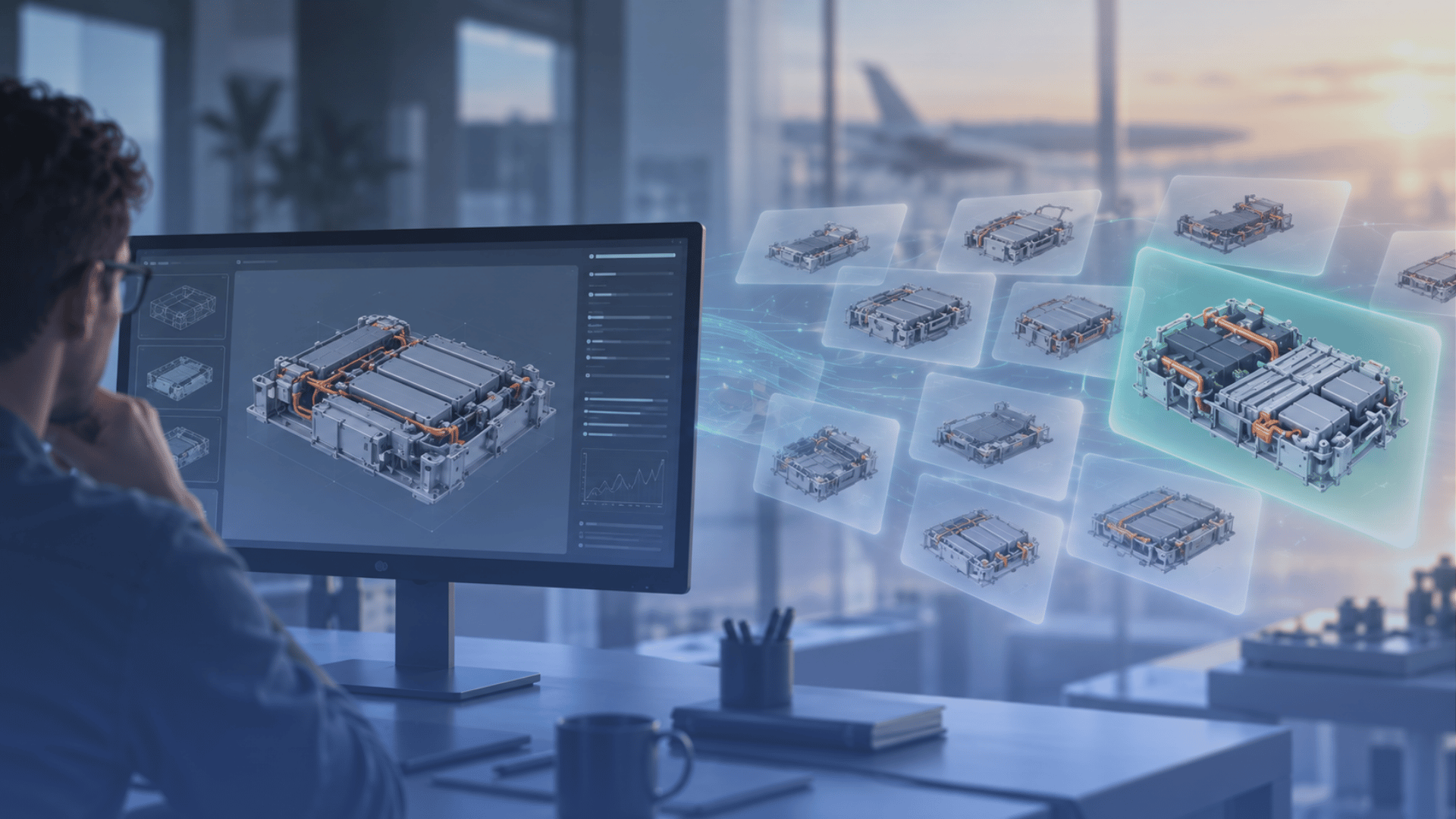
AI is reshaping how products are designed — from concept to manufacturing — and the emergence of AI agents is about to accelerate this shift dramatically.
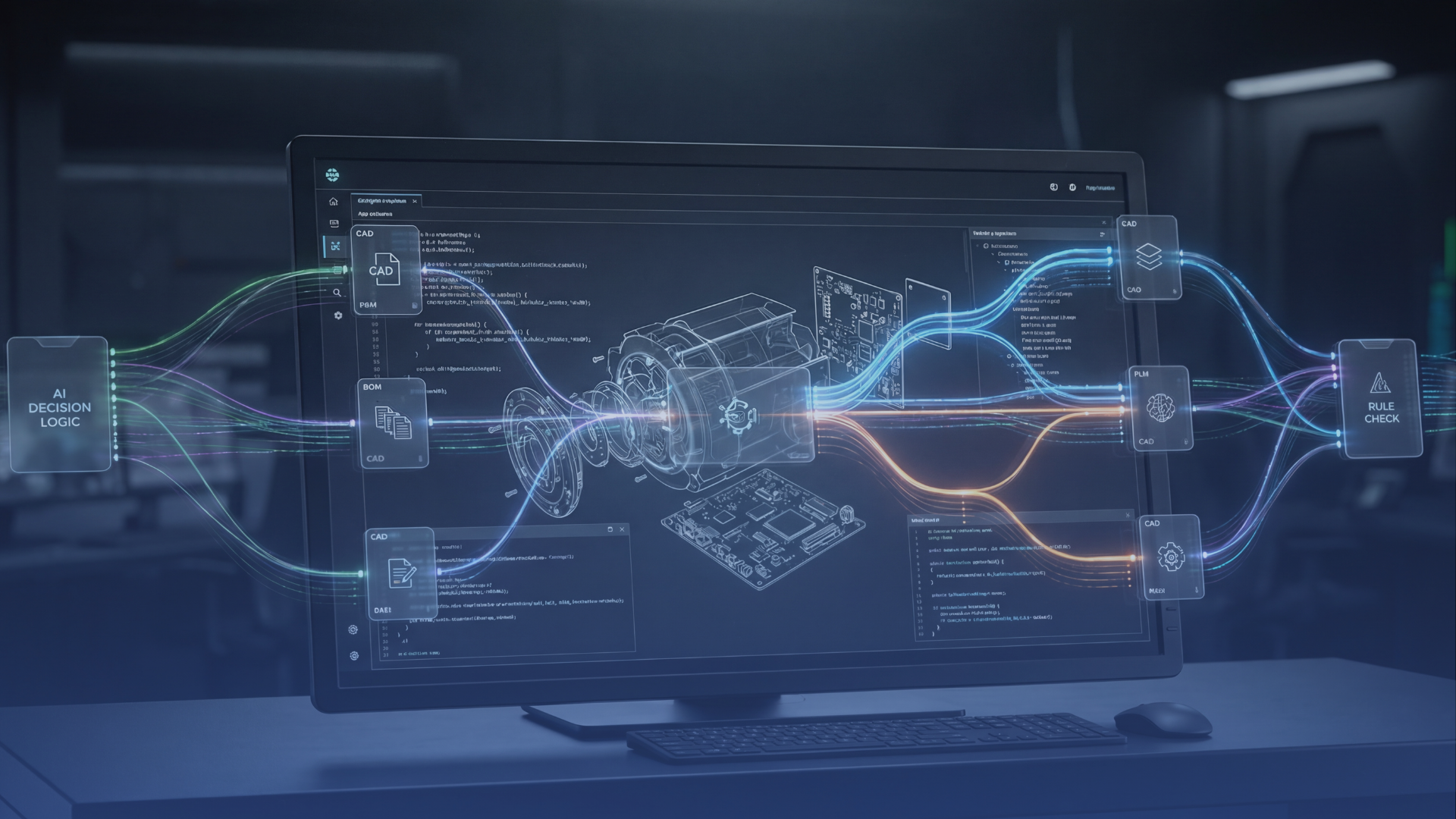
The engineering design landscape is undergoing its most significant transformation in decades. As products grow more complex — integrating mechanical systems, electronics, software, and digital architectures — traditional design workflows built on manual exploration, sequential validation, and fragmented toolchains are reaching their limits. Artificial intelligence is stepping in to fill that gap, and the emergence of AI agents is about to accelerate this shift dramatically.
At Dessia, we've spent over a decade building the AI foundations that make this transformation possible. Our work sits at the intersection of symbolic reasoning, statistical machine learning, and deep engineering domain expertise — and we believe the convergence of these technologies with agentic AI will redefine how products are conceived, validated, and brought to market.
Today's engineering teams face an unprecedented set of pressures: shorter time-to-market deadlines, sustainability and eco-design mandates, rising performance expectations, and relentless cost constraints. Yet many R&D departments still rely on manual design exploration, spreadsheet-driven rule checks, tribal knowledge passed between senior engineers, and disconnected tools across CAD, simulation, and PLM platforms.
The consequences are well-documented: slow iteration cycles where complex design changes take days or weeks to validate, loss of expert knowledge due to retirements and turnover, high error rates in manual BOM verification and compliance checking, and disconnected systems that prevent seamless data flow. In fast-moving industries like automotive, aerospace, energy, and defense, these inefficiencies translate directly into missed deadlines, cost overruns, and quality risks.
This is precisely the problem that AI-driven engineering design is built to solve.
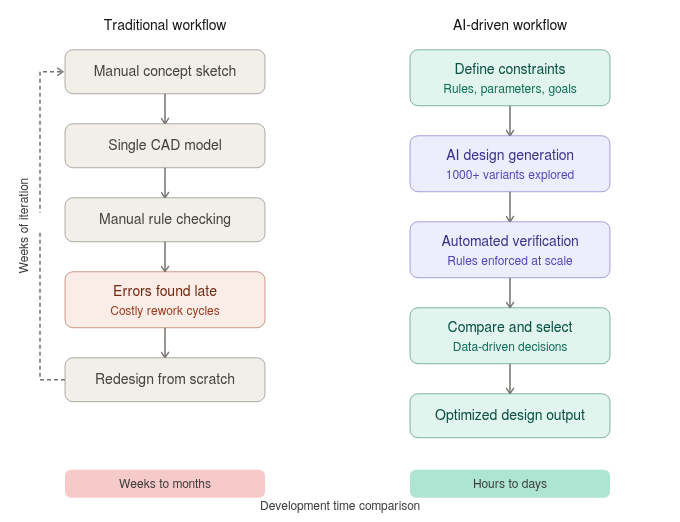
AI-driven engineering design is an approach where artificial intelligence algorithms assist engineers in generating, evaluating, and optimizing design solutions based on structured engineering rules and system constraints. Rather than manually testing individual configurations one by one, AI systems can explore thousands of potential design options automatically — enabling engineers to focus on high-level decision-making while computational systems handle the complexity of design space exploration.
The goal is not to replace engineers but to augment engineering expertise with computational intelligence. This distinction matters: the best AI engineering platforms preserve human creativity and control while eliminating the repetitive, error-prone work that slows teams down.
Most AI tools in the design space rely on large-scale deep learning — powerful, but often opaque. Design workflows, however, demand predictability, explainability, and domain logic. That's why we built our platform on a hybrid AI architecture that combines three complementary pillars:
This triad allows us to go beyond simple automation. Our platform enables genuine reasoning, validation, and knowledge reuse across design cycles — something that purely data-driven approaches like generic generative AI cannot reliably achieve in engineering contexts where precision, safety, and compliance are non-negotiable.
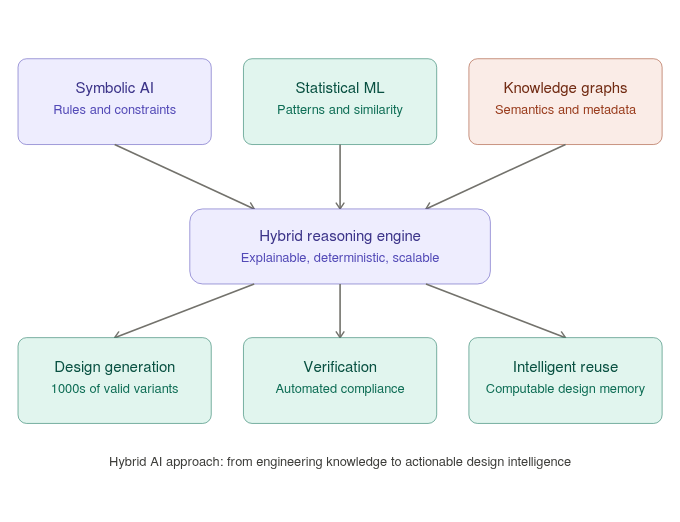
AI Design Generation: We automatically generate and optimize system architectures and mechanical integration within engineering constraints. Engineers define parameters, rules, and constraints, and the platform produces thousands of feasible design configurations — each respecting the encoded logic. Applications span wiring harness routing, hydraulic piping design, battery pack configuration, hydrogen storage system optimization, and more.
AI Design Verification and Validation: We automate 2D drawing completeness checks, configurable 3D rule checks, and cross-data coherence verification — reconciling drawings, 3D models, BOM, and PLM data. This eliminates the bottleneck of manual design reviews while ensuring consistency across variants, configurations, and large programs.
Intelligent Design Reuse: Rather than relying on basic "find a similar part" searches, our system reads native CAD structure — parametric features, constraints, and operations — to understand geometry functionally. Using part embeddings and similarity models, we transform what used to be tribal memory into a computable, scalable design intelligence system.
Seamless Integration: Our platform connects through API with third-party software including PLM solutions and supports industry-standard 3D CAD formats. It is available both as a cloud-based solution and as an on-premise deployment for organizations with strict security and compliance requirements.
Our platform delivers tangible outcomes: engineering teams can explore over 1,000 design solutions in just 6 hours, cut development time by up to 80%, and achieve measurable reductions in rework and late-stage errors. These results reflect real-world performance across our client base, which includes major industry players such as Renault, Safran, Saft, Naval Group, and OPmobility.
The broader AI landscape is experiencing a pivotal shift toward agentic AI — autonomous systems capable of pursuing objectives, planning actions, using tools, and adapting behavior based on outcomes. This trend is reshaping every industry, and engineering is no exception.
Industry analysts project the AI agent market will grow from roughly $7.8 billion to over $52 billion by 2030. Gartner predicts that 40% of enterprise applications will embed AI agents by the end of 2026, up from less than 5% in 2025. In engineering specifically, AI agents are being deployed to validate manufacturability and regulatory compliance early in the design phase, automate complex routing and layout optimization tasks, bridge data silos across CAD, simulation, and documentation platforms, and standardize decision-making to guide junior engineers through complex systems logic.
The evolution is clear: AI in engineering is moving from reactive assistance to proactive, autonomous action. The first generation of AI tools helped engineers with isolated tasks — running simulations, suggesting materials, or checking dimensions. The next generation, now emerging, consists of AI agents that can orchestrate entire engineering workflows: interpreting goals, executing multi-step processes, requesting human approval at critical junctures, and continuously learning from feedback.
As AI agents move into engineering, a critical question emerges: what separates a useful engineering agent from a generic chatbot with access to CAD files? The answer lies in domain-specific intelligence — the kind of structured reasoning, constraint enforcement, and explainable decision-making that engineering workflows demand.
Generic large language models can generate plausible-sounding suggestions, but they lack the deterministic logic, rule libraries, and structured knowledge representations needed to produce designs that are actually manufacturable, compliant, and optimized. Engineering AI agents need to understand spatial constraints, connectivity conditions, compliance requirements, and trade-off hierarchies — not just predict the next token.
This is where the kind of hybrid AI architecture we've built becomes essential infrastructure for the agentic era. The ability to encode engineering rules into constraint networks, reason through design spaces algorithmically, and produce fully traceable results maps directly onto what an autonomous engineering agent needs to operate safely and effectively. The leap from AI-powered design automation to AI agents that can orchestrate entire engineering workflows is a natural evolution for platforms that already embed deep engineering logic — and it's an evolution we take very seriously.
One of the critical differentiators in AI for engineering is explainability. In industries where safety, certification, and regulatory compliance are paramount, a black-box AI system that produces unexplainable results is fundamentally inadequate. Engineers need to understand why a design was generated, what rules it satisfies, and how trade-offs were evaluated.
Our hybrid approach addresses this directly. The symbolic AI layer provides full transparency for every result, ensuring that design decisions are traceable and auditable. This is crucial for sectors like aerospace and defense, where certification authorities require complete documentation of the design rationale — and it will be equally critical as AI agents take on more autonomous decision-making in engineering workflows.
Several converging trends will shape the next chapter of AI in engineering design:
The convergence of AI, generative design, and agentic automation is creating a once-in-a-generation opportunity to reimagine how products are engineered. Companies that embrace AI-driven design today will explore more alternatives, reduce development cycles, catch errors earlier, and deliver more innovative products at lower cost.
We've spent over a decade building the AI foundations that make this possible — a hybrid approach that combines explainability with computational power, proven across the world's most demanding industrial organizations.
The future of engineering is not automated design without engineers. It is engineering knowledge amplified by artificial intelligence. And that future is already here.
As part of this vision, we are developing Lagrangia 1.0 — our agentic AI model designed to make the power of the Dessia platform accessible to a much wider audience. Until now, leveraging our platform's full capabilities required deep engineering workflows and structured inputs. Lagrangia 1.0 changes that equation. By introducing an intelligent, conversational layer on top of our hybrid AI engine, Lagrangia 1.0 will allow more engineers, across more teams and more use cases, to tap into AI-driven design exploration, verification, and optimization — without needing to be platform experts. It's the key to democratizing what we've built and scaling its impact across the entire engineering organization.
We've been building toward this moment for a long time. Everything we've shared in this article — the hybrid AI, the rule libraries, the explainable reasoning — is the foundation. Lagrangia 1.0 is what brings it all together. Stay tuned.

Published on
15.04.2026
These articles may be of interest to you
Engineering intelligence
Why CAD data alone is not enough for engineering AI—and how requirements, rules and verification turn geometry into trusted design decisions.
7 min reading

Engineering intelligence
Most industrial AI pilots fail to scale because they add AI on top of fragmented engineering data (CAD, PLM, requirements, BOMs, test reports) instead of connecting that data first. An Engineering Intelligence Layer turns disconnected engineering files into a connected knowledge graph, giving AI the context it needs to produce trustworthy, traceable engineering decisions—not just plausible-sounding text.
7 min reading

Engineering intelligence
Your CAD models show what was designed. Your engineering rules explain why. Discover how Dessia's CAD-aware AI turns engineering rules into executable engineering knowledge — capturing your organization's expertise so AI can apply it automatically.
8 min reading