
AI & automation
What is synthetic engineering data? Discover how CAD, engineering rules and generated design alternatives can create new datasets for AI, design exploration and industrial engineering.
9 min reading

Stop losing time to recurring design errors by turning failure knowledge into structured, AI-powered engineering intelligence.
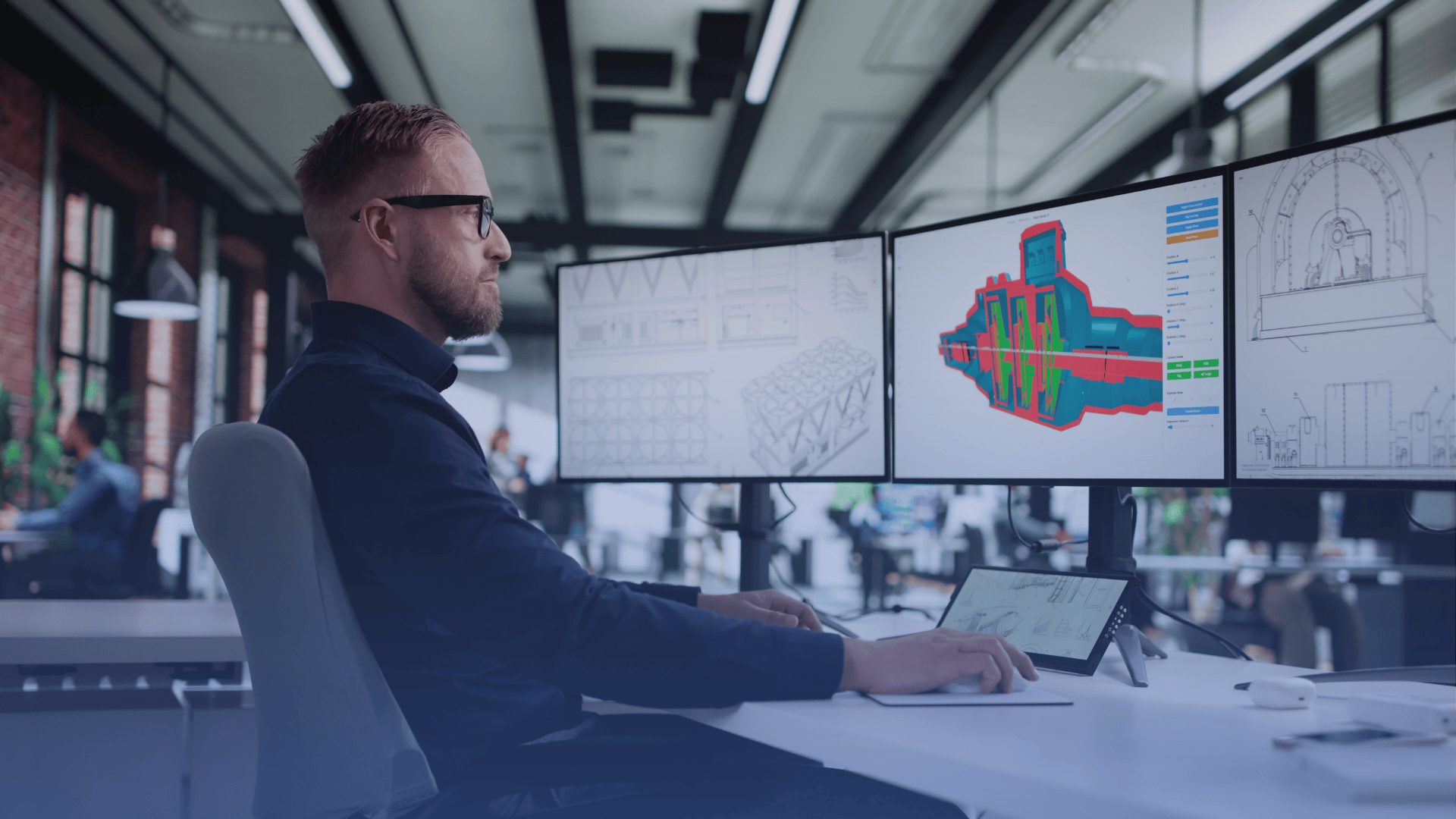
A cooling architecture fails thermal validation.
A structural bracket passes simulation but cracks under real load.
An assembly concept looks correct in CAD yet becomes impossible to manufacture.
Six months later, someone realizes: the same approach had already failed years earlier.
Repeated design mistakes are rarely caused by lack of competence. They stem from structural gaps in how engineering knowledge is captured, structured, and reused.
In modern hardware development environments, system complexity increases faster than institutional memory. Engineers rotate across programs. Senior experts retire. Design data accumulates in PLM systems, review decks, and validation reports — but remains disconnected and difficult to reuse operationally.
Preventing repeated design mistakes is not merely a quality control initiative.
It is a strategic capability that defines engineering maturity.
When a previously invalidated concept resurfaces, the consequences extend far beyond rework.
Engineering bandwidth is consumed by redundant iteration cycles. Weeks of modeling, simulation, reviews, and validation preparation are invested in a configuration that prior experience had already ruled out under similar conditions.
If the issue is not identified early, it propagates into prototyping and testing. At that stage, costs multiply through supplier adjustments, additional simulation campaigns, hardware rework, and schedule compression.
More critically, late discovery impacts timelines. In industries such as automotive, aerospace, energy, and heavy equipment, even small delays can affect certification, production readiness, or competitive positioning.
Repeated design mistakes are not isolated inefficiencies.
They are systemic performance losses.
Design engineering teams rigorously document what works — released geometries, validated architectures, certified assemblies.
What is rarely structured is why something failed.
The stress concentration that triggered fatigue.
The material interaction that caused degradation.
The tolerance accumulation that blocked assembly.
These insights often remain embedded in presentations, emails, or individual memory. When people move on, the reasoning disappears with them.
Most companies already hold extensive technical history:
Traditional PLM and document repositories store this information, but they do not reason over it. They cannot automatically compare a new configuration to structurally similar past designs.
Designers are left to rely on recollection instead of system-level analysis.
Repeated design mistakes are rarely exact duplicates. They are structural variations.
A modified geometry.
A different material grade applied to a similar configuration.
An architectural concept reintroduced with slight changes.
Humans cannot manually compare thousands of historical configurations across parameters, constraints, and geometry.
This is where structured modeling and AI-assisted analysis become essential.
Eliminating recurrence requires more than documentation. It requires computational engineering memory.
Dessia provides the modeling infrastructure to make engineering knowledge structured, reusable, and machine-interpretable.
When a design issue occurs, the outcome is usually documented. The underlying variables that caused the issue are not.
Dessia enables teams to explicitly model:
When historical lessons are integrated into this structured environment, they become part of the formal design model. Instead of remaining buried in narrative documents, they influence future configurations directly through defined parameters and constraints.
Knowledge remains fully controlled internally, but becomes computationally usable.
Dessia structures engineering logic through AI libraries, where components, parameters, and constraints are explicitly defined and interconnected.
This approach makes relationships between design variables transparent and computable. Rather than treating each CAD model as an isolated artifact, engineers work within a consistent framework where interactions, dependencies, and validation logic are encoded.
Historical insights, when integrated into this model, inform future design instances systematically — without relying on individual memory.
Preventing recurrence also requires identifying when a new configuration is structurally close to a previously explored one — and ensuring that design logic converges toward validated standards rather than drifting into unstable variations.
Within the structured model, Dessia enables comparison across defined parameters, constraint sets, and performance criteria. In addition, geometric signatures can be extracted from CAD representations, translating geometry and topology into structured descriptors.
By combining parametric comparison with CAD-derived signatures, new designs can be evaluated for structural proximity to prior configurations and aligned with established design standards — even when the visible geometry differs.
This supports both early recurrence detection and progressive design standardization within the engineering process, before issues propagate into physical validation.
Similarity detection is only one layer of prevention. Known engineering constraints must also be applied consistently.
Dessia allows internal standards, manufacturing feasibility rules, certification requirements, and architectural consistency conditions to be encoded directly within the Dessia platform.
These rules are evaluated continuously during design generation and validation. Instead of relying solely on late-stage reviews, compliance becomes embedded in the workflow itself.
Repeated design mistakes are not inevitable. They are the consequence of unstructured engineering memory.
By formalizing design logic, structuring system relationships, leveraging CAD-based similarity analysis, and embedding rule-based verification, teams can significantly reduce the likelihood of reintroducing previously invalidated configurations.
Preventing recurrence is not about remembering better.
It is about engineering systems that do not forget.

Published on
02.03.2026
These articles may be of interest to you
AI & automation
What is synthetic engineering data? Discover how CAD, engineering rules and generated design alternatives can create new datasets for AI, design exploration and industrial engineering.
9 min reading
AI & automation
Neural CAD is pushing AI beyond images and text toward direct reasoning in engineering geometry. But the real breakthrough will come when geometric intelligence is combined with engineering rules, context and knowledge.
11 min reading

AI & automation
Aerospace and defense organizations have invested heavily in digital threads, PLM and MBSE. The next step is turning connected engineering data into decision-grade intelligence that can generate, verify and trace technical decisions directly within engineering processes.
min reading