
AI & automation
What is synthetic engineering data? Discover how CAD, engineering rules and generated design alternatives can create new datasets for AI, design exploration and industrial engineering.
9 min reading

CAD is no longer just geometry. Discover how Dessia's CAD-aware AI transforms native CAD models into reusable engineering intelligence by connecting geometry with design intent, requirements, and engineering knowledge.
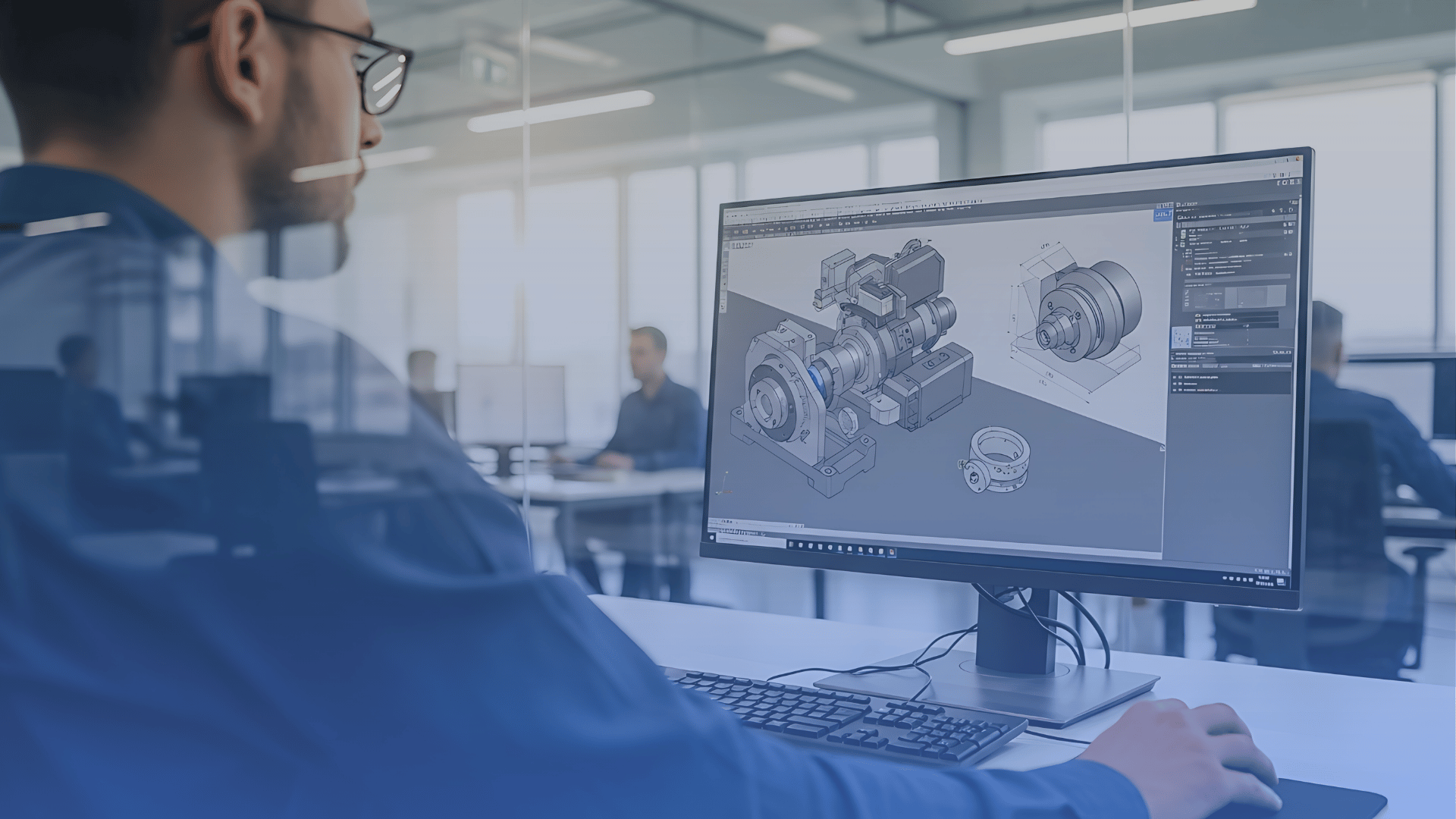
Every CAD file your team has ever created is telling a story. Right now, almost nobody can read it.
For three decades, CAD has been the language of engineering — the way ideas become aircraft, vehicles, machines, and systems. It's precise, universal, and indispensable. But CAD has only ever spoken one dialect fluently: geometry. It tells you what was built. It stays silent on why.
That silence is expensive. And it's about to become the most interesting problem in engineering AI.
A new generation of tools can already scan a 3D model, recognize a similar part, and shave hours off a search. That's real progress. But spotting a familiar shape isn't the same as understanding the engineering behind it. A bracket doesn't announce the loads it was designed to survive. A wiring harness doesn't explain the regulations it was built to satisfy. Geometry shows you the surface — engineering intelligence lives underneath it.
Somewhere in your archives is the answer to a problem your team is solving right now — already solved, already validated, already proven in the field. It's just filed under a part number nobody remembers, described in a report nobody's opened in years, or living only in the memory of an engineer who's since moved on.
That's not a filing problem. It's a knowledge problem, and it repeats itself in every engineering organization:
Solved problems get solved again. Validated designs get redesigned from scratch. And every retirement, every departure, quietly erases a little more institutional expertise.
None of this requires replacing your engineers with AI. It requires giving AI the ability to understand engineering the way your best engineers do — not just what a part looks like, but why it exists, what it satisfies, and whether it still holds up today.
Two brackets can be nearly identical twins in geometry and total strangers in function. Two harnesses can trace the same path through a chassis and answer to completely different electrical architectures. Shape, on its own, can flatter you into the wrong decision.
The things that actually decide whether a design is right — system architecture, material choices, manufacturing limits, compliance, simulation results, the accumulated judgment calls of past programs — never lived inside the 3D model to begin with. They live in the engineering intelligence surrounding it. And that's precisely the layer that geometry search can't see.
This is the layer we build.
Dessia's AI starts where you'd expect: Geometry-aware, reading your native models directly — geometry, features, assemblies — with all the precision of a modern geometry-aware AI system. That's table stakes, and we do it well.
The real difference sits just underneath it. We call it the Engineering Intelligence Layer, and it's built from more than your CAD files. It draws on the documentation, validation history, and hard-earned know-how your engineers carry with them — the parts of your engineering memory that never made it into a drawing. That layer ties every component back to the intent, the requirements, and the rules that shaped it.
The payoff is a simple but powerful shift in the question you get to ask. Not "where's a part that looks like this?" but "which validated solution actually meets what I need?" One is a search. The other is a decision, backed by your own engineering history.
The Engineering Intelligence Layer isn't a single trick, it's three capabilities working together, and each one does something a geometry search simply can't.
Semantic. Dessia's AI doesn't just see a cylindrical cut in a bracket; it recognizes it as a bearing seat, a mounting interface, a stress-critical feature — the same way an experienced engineer reads a drawing rather than just looking at it. That's the difference between rendering a shape and understanding what it's for.
Contextual. No component exists in isolation, and neither does Dessia's view of it. Every part is linked to the system it belongs to: the functional architecture around it, the interfaces it depends on, the requirements it was built to satisfy. Change one variable upstream, and the AI understands what else it touches downstream.
Executable. This is where knowledge stops being a reference document and starts doing work. Verification rules don't just sit in a spec sheet — they run automatically against your models. Design architectures don't just get described in a report — they can be generated and explored in minutes. Component rationalization, automated compliance checks, engineering decision support — all of it becomes possible once your engineering knowledge is structured enough for AI to act on, not just store.
None of this asks you to rip out what you already have. Dessia ingests native CAD formats, engineering rules and requirements, and structured data such as BOMs stored in Excel, Word, and other enterprise documents. It plugs into the CAD and PLM environments you already run — the Engineering Intelligence Layer sits on top, quietly connecting the dots your current stack was never built to connect.
CAD changed engineering once by making design digital. It's changing again by becoming intelligent — capable of holding not just what your team built, but everything it learned along the way. That's what the Engineering Intelligence Layer is for: turning a CAD library into an asset your organization can keep drawing on, project after project.
If your CAD library feels more like storage than strategy, it's worth a conversation. See what Dessia's CAD-aware AI can do with your engineering data. https://www.dessia.io/case-studies
What is CAD-aware AI?
AI that reads and interprets CAD models directly — geometry, features, assemblies — rather than treating them as generic files. Dessia's AI is CAD-aware at its core, then adds an Engineering Intelligence Layer on top so it also understands the knowledge behind the geometry.
What's the difference between CAD-aware and engineering-aware AI?
CAD-aware, or geometry-aware, AI tells you what a part looks like. Engineering-aware AI tells you why it was designed that way — its function, constraints, and validation history — so you know whether it genuinely fits a new requirement.
What is Dessia's Engineering Intelligence Layer?
The layer Dessia builds on top of your CAD models and everything around them — documentation, validation history, and engineering know-how. It connects geometry to design intent, constraints, and verification rules, turning your CAD library into structured, reusable engineering intelligence.
Why isn't geometry recognition enough for engineering AI?
Because two parts can look alike and serve entirely different purposes. Real engineering decisions hinge on context — requirements, compliance, manufacturing constraints — that shape alone can't reveal.
How does this help my team reuse past designs?
By linking every model to the requirements and constraints it satisfies, Dessia's AI can tell you which validated designs genuinely fit a new problem, not just which ones resemble it — cutting redundant work and preserving expertise as teams change.
How does Dessia make CAD models engineering-aware?
By ingesting your CAD models alongside the data around them — documentation, validation history, engineering know-how — and enriching it all with the Engineering Intelligence Layer, linking geometry to intent, constraints, and verification rules.

Published on
20.08.2026
These articles may be of interest to you
AI & automation
What is synthetic engineering data? Discover how CAD, engineering rules and generated design alternatives can create new datasets for AI, design exploration and industrial engineering.
9 min reading

AI & automation
Neural CAD is pushing AI beyond images and text toward direct reasoning in engineering geometry. But the real breakthrough will come when geometric intelligence is combined with engineering rules, context and knowledge.
11 min reading

AI & automation
Aerospace and defense organizations have invested heavily in digital threads, PLM and MBSE. The next step is turning connected engineering data into decision-grade intelligence that can generate, verify and trace technical decisions directly within engineering processes.
min reading